
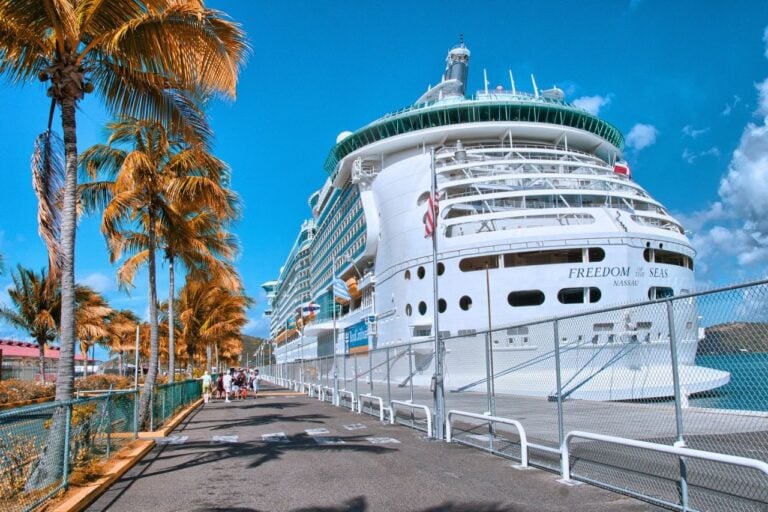
A Caribbean cruise makes exploring somewhere new feel wonderfully easy.
You just walk down the gangway, grab a taxi, and there’s a whole day ahead of beaches, local food, and sightseeing.
But a cruise ship calling at a destination doesn’t mean every part of it is safe to explore casually.
Some ports have neighborhoods with serious crime problems. Others require extra care when choosing transportation, booking activities, or deciding how far to wander independently.
These seven stops deserve a little more planning. They aren’t presented as a statistical ranking: risks vary between neighborhoods, and countrywide crime figures don’t tell the whole story for cruise passengers.
(The Bahamas is included because it commonly appears on Caribbean cruise itineraries.)
1. Nassau, Bahamas

Nassau is familiar to plenty of cruisers.
That familiarity can make it tempting to leave the terminal and assume the whole city is equally straightforward to explore.
It pays to know where you’re going.
The U.S. State Department identifies Nassau and Freeport as the locations where most crime in the Bahamas occurs.
It specifically highlights Nassau’s Over the Hill area, south of Shirley Street, where gang violence has killed residents, typically in targeted attacks.
It also warns about poorly regulated boating and reports of assaults involving jet ski operators.
For passengers, the practical advice is simple: research your walking route and avoid wandering into unfamiliar residential areas looking for a shortcut.
Leave expensive jewelry aboard, keep your bag closed, and use authorized transportation for destinations farther away.
At the beach, check activity operators carefully. A cheap rental offered on the beach may need a double-check, not just a quick glance at the price.
2. Freeport, Bahamas

Freeport shares the Bahamas’ crime concerns, but it needs its own shore-day plan.
The national advisory identifies armed robbery, burglary, and assault among the risks travelers should consider, and names Freeport as one of the country’s main locations for crime.
That doesn’t establish the risk on every beach or excursion, but it deserves attention.
Arrange transportation before heading off to explore.
Know your destination, confirm the fare, and establish how the return trip will work. If a price is quoted for a group, check that it covers everyone.
For a beach day, choose somewhere with established facilities and dependable transportation back.
An isolated stretch of coastline might look peaceful, but think about how you would get help or find another ride.
Leave a comfortable time buffer, too. Rushing back to the ship can push passengers into accepting transportation they haven’t properly checked.
3. Montego Bay, Jamaica

Montego Bay offers beaches, local food, and excursions along Jamaica’s north coast. It also calls for care beyond the port gates.
The U.S. State Department says violent crime is a risk throughout Jamaica and specifically identifies Montego Bay and Kingston as places where armed robberies and assaults are common.
It also cautions that gated resorts can experience violent crime.
Those warnings cover a broader setting than a daytime cruise excursion. Still, they give passengers a good reason to choose their plans carefully.
A reputable organized tour or prearranged driver is a sensible option, particularly for anyone unfamiliar with the area.
Check recent reviews, confirm the itinerary, and make sure the operator understands the ship’s all-aboard time.
The advisory recommends avoiding public buses, secluded places, and walking or driving at night.
4. Belize City, Belize
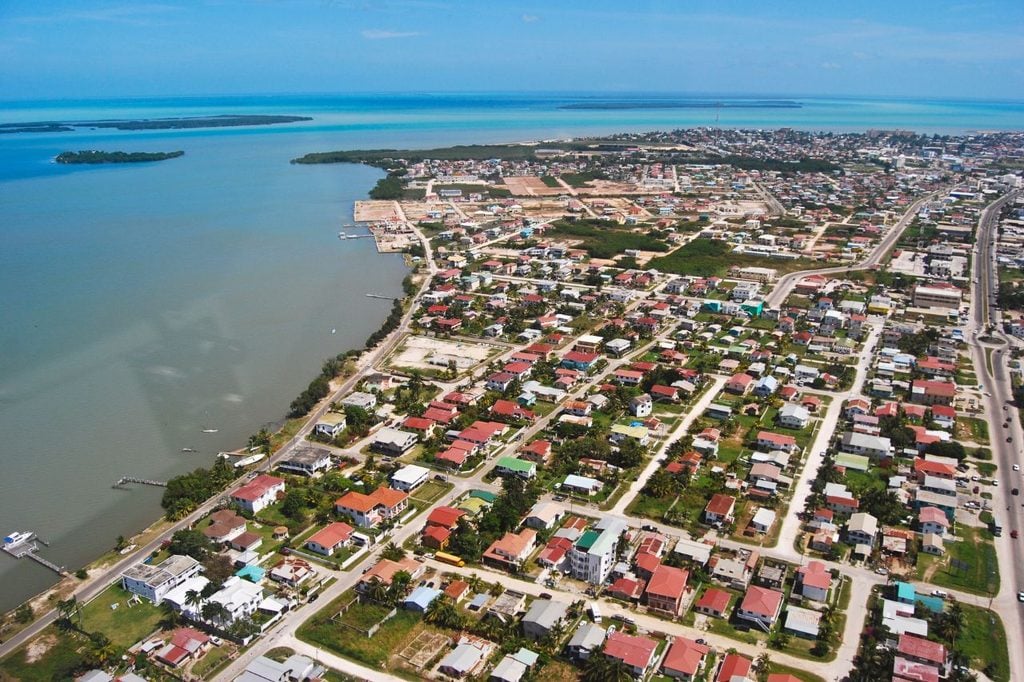
Belize can deliver a fantastic port day, especially for passengers interested in reefs, wildlife, and archaeological sites.
But Belize City needs some homework before an independent walk.
The U.S. advisory singles out Southside Belize City for a higher warning level, advising travelers to reconsider visiting because of crime.
Much of the violence is linked to gangs, although violent incidents can also happen during daylight hours and in tourist areas.
That distinction matters. The warning doesn’t mean every neighborhood or excursion destination has the same conditions.
Choose a researched route or reputable excursion rather than heading into the city without a plan.
Keep your phone secure when you’re not using it, and avoid displaying cash while paying for small purchases.
Check the actual port on your itinerary, too. Belize City and Harvest Caye are different destinations, so advice about one should not automatically dictate your plans for the other.
5. Roatán, Honduras

Roatán deserves a careful explanation because mainland Honduras’ security problems can easily overshadow the island’s different circumstances.
The UK government says the Bay Islands are generally safer than mainland Honduras.
However, it also notes criminal attacks on visitors and recommends traveling with a reputable guide when visiting Roatán.
Its safety guidance identifies petty theft as a problem in tourist areas, including the Bay Islands.
Extra caution is reasonable, but treating the entire island as uniformly dangerous would be misleading.
At the beach, avoid leaving phones, wallets, and cruise cards unattended while everyone goes swimming.
Taking turns watching the bags may be a little inconvenient. Still, it beats spending the afternoon dealing with stolen belongings.
6. Port of Spain, Trinidad and Tobago
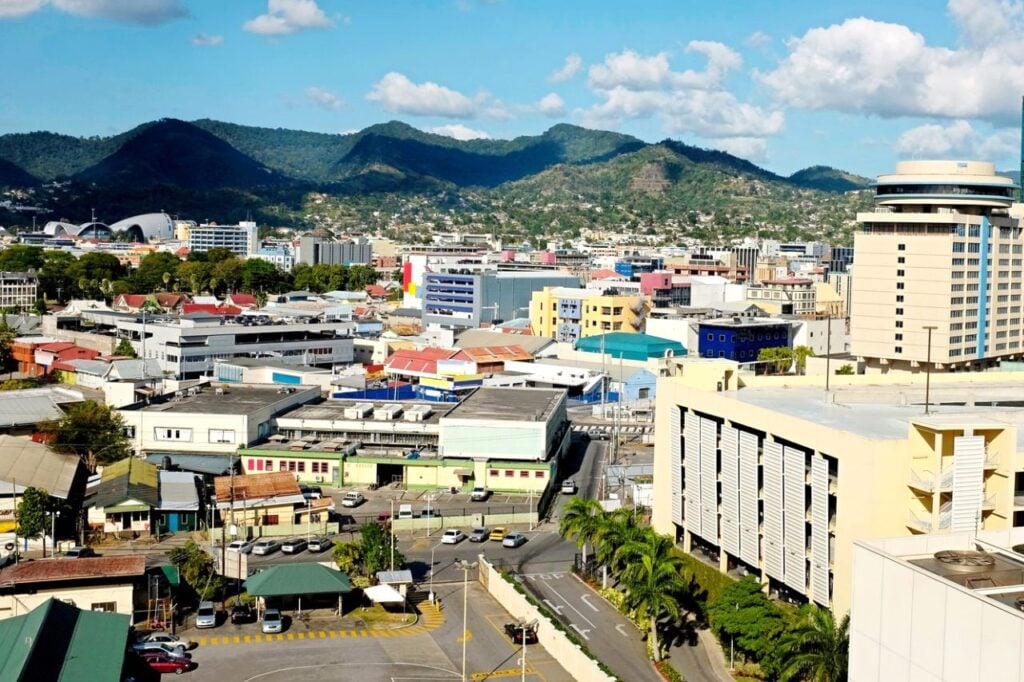
Port of Spain is a stop where knowing the local geography really matters.
The U.S. advisory restricts government employees from visiting several areas because of crime, including Laventille, Beetham, Sea Lots, and Cocorite.
It also places restrictions on downtown Port of Spain and other locations after dark.
These are specific warnings that deserve attention.
A daytime arrival is no reason to wander into an unfamiliar neighborhood without checking the route.
For a first visit, a reputable guided excursion is a practical choice.
Arrange transportation through an established operator and avoid isolated places, particularly when exploring alone.
Read the latest destination guidance shortly before sailing and listen to any additional instructions from the ship.
7. Cartagena, Colombia

Cartagena’s historic streets make it an appealing sightseeing stop. A beautiful setting still calls for sensible precautions, though.
Colombia’s national advisory warns about crime and robberies involving taxis hailed on the street.
Those countrywide concerns should not be interpreted as proof that Cartagena’s tourist districts have the same conditions as Colombia’s highest-risk regions.
For cruise passengers, prearranged transportation and secure belongings are useful starting points.
Use a reputable transfer, keep bags closed, and agree on prices before accepting services.
Boat trips need attention as well. The State Department specifically warns about small tourist boats traveling between Cartagena and nearby islands.
It notes that seas can be dangerous in December and January and that U.S. citizens have sadly died in boating accidents.
Check for life jackets and safety equipment before boarding.
If conditions look rough or the boat seems unsuitable, don’t let a prepaid ticket make the decision for you.
A Few Precautions Worth Taking at Every Port
Before leaving the ship, save the port agent’s contact details and check the all-aboard time.
Carry the identification required for that call, a working payment method, and enough cash for the day and for emergencies (but don’t carry more than you need).
Leave valuable jewelry in the cabin safe. Download an area map and make sure someone in your group knows the return plan.
Choose excursions for the operator’s reliability, not just the lowest price.
Check recent reviews, transportation arrangements, and how much time the activity leaves before departure.
And if a route, driver, or activity makes you uncomfortable, change the plan. There’s no obligation to squeeze every possible experience into one port day.
Safety information checked November 2026. Review current advisories and cruise-line guidance before traveling.