
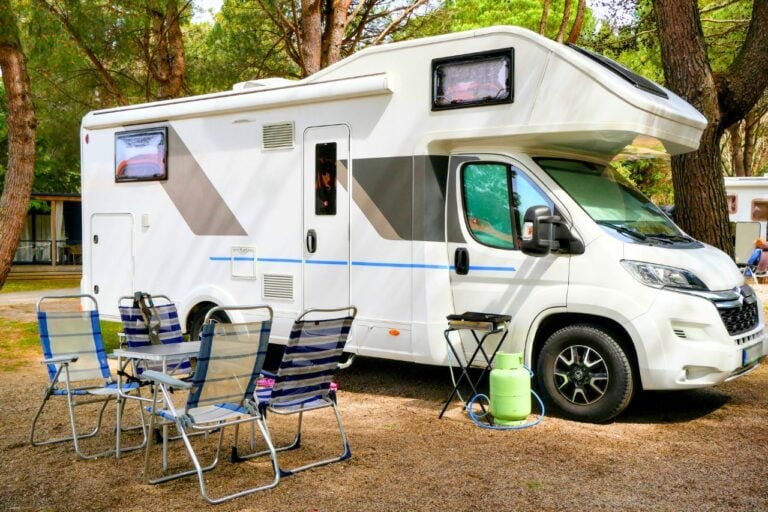
There’s a certain relief that comes with finally pulling into a campsite.
It’s tempting to shut off the engine, open everything up, and get straight to the good part.
But those first few minutes matter. A small mistake now can mean packing things away again or discovering that the lovely shady spot comes with a tree exactly where the slide needs to go.
Nothing ruins the arrival-day mood quite like having to park twice.
Before the chairs come out, here are seven things worth slowing down for.
1. Start Unpacking Before Checking Your Position
The RV fits on the pad. That means the parking job is finished, right? Well, almost.
Fitting into a campsite and being properly positioned in it are two different things.
There needs to be room for the steps, slides, storage doors, and whatever outdoor setup you actually plan to use.
Then there are the hookups.
A power pedestal can look perfectly close from the driver’s seat, only for the cord to come up short once it’s pulled out. Same story with the sewer connection.
Before unloading, take a slow walk around the RV. Check the distance to the connections, the space beside the door, and anything overhead.
And leave yourself a usable outdoor space. Having the door open directly into a shrub is never a good idea!
2. Unhitch Your Trailer Before Chocking the Wheels
After a long drive, getting the truck disconnected can feel like the final chore.
Still, wheel chocks need to come before unhitching.
A campsite doesn’t have to look especially steep for a trailer to move. That slight slope you barely noticed while backing in can suddenly become very noticeable once the tow vehicle is disconnected.
For a travel trailer, complete the side-to-side positioning and leveling first, then properly place the wheel chocks before releasing the hitch.
Keep the chocks somewhere easy to reach, too. You’ll need them almost immediately.
This is one of those little jobs that deserves to be boring. Same order. Every arrival.
3. Use the Stabilizers to Fix an Uneven RV
The floor feels tilted, so down go the stabilizers. Another turn here, a little more pressure there.
Easy enough. Except ordinary stabilizer jacks aren’t designed to do the job of a leveling system.
Their purpose is to reduce movement once the RV is level. Using them to lift and straighten a trailer can damage equipment.
Dedicated leveling jacks are different equipment, so follow the instructions for the system your RV actually has.
There’s also the ground underneath to think about. A jack foot sitting on soft soil might look fine at first, then settle once the weight is on it.
4. Push the Slide-Out Button Without Looking
The campsite looks clear through the window. A very common beginner mistake!
A power pedestal, tree trunk, raised utility cover, or open storage door can sit right in the path of an extending slide. Inside, a loose item or open cabinet can cause trouble, too.
Check the entire moving area before touching the switch, including above and below the obvious places. Make sure people and pets are clear as well.
The order of leveling and extending slides can vary between RV models, so use the sequence in your owner’s manual.
And if someone else is helping, agree on who operates the controls. Two people confidently doing different parts of setup can create a surprising amount of confusion.
5. Hook Up the Water and Immediately Walk Away
Connecting the water hose feels like a quick job. Screw it on, turn the tap, done.
Usually, yes. But always give it another minute.
Use a hose approved for drinking water and suitable pressure regulation for your RV.
Campground water pressure shouldn’t simply be assumed safe for the plumbing.
Once connected, stay nearby and check for leaks. Look at the fittings, check the utility compartment, and make sure water is going where it should.
Keep freshwater equipment separate from sewer gear, too. Arrival-day hurry is no reason to set the clean hose down with the dirty stuff.
Dinner can wait another minute. The hose deserves that much attention.
6. Spread Your Entire Campsite Across the Site Next Door
An empty neighboring site can make your own space feel wonderfully roomy.
Then another RV arrives, and somebody has to move the chairs out of its parking space.
Set up inside your assigned campsite from the start. Keep the access road clear, leave room around shared utilities, and avoid assuming that an empty patch of grass belongs to your site.
The same goes for walking routes. A convenient shortcut between your door and the bathrooms might pass straight through someone else’s outdoor living area.
Also, don’t forget to check the campground’s rules before putting down a large rug or assembling a bigger setup.
7. Turn Setup Into a Race
Sometimes the biggest mistake isn’t a particular piece of equipment. It’s the rush.
There’s a line of vehicles behind you. It’s getting dark. Someone is hungry, someone needs the bathroom.
Pause before starting the next job. Make sure the RV is secured, decide who is handling what, and work through the setup instructions for your rig.
If a friendly conversation is breaking your concentration, a simple “Give us a few minutes to get settled” is perfectly reasonable.
Keep the chairs packed until the important jobs are finished. Once somebody sits down with a cold drink, the motivation to check that last connection tends to disappear.
Then take one final walk around. Look for a dripping fitting, something left in the driveway, or a storage door still hanging open.
After that, pull out the chairs.
There’s something much nicer about settling into one when there’s no nagging feeling that a step got skipped.