
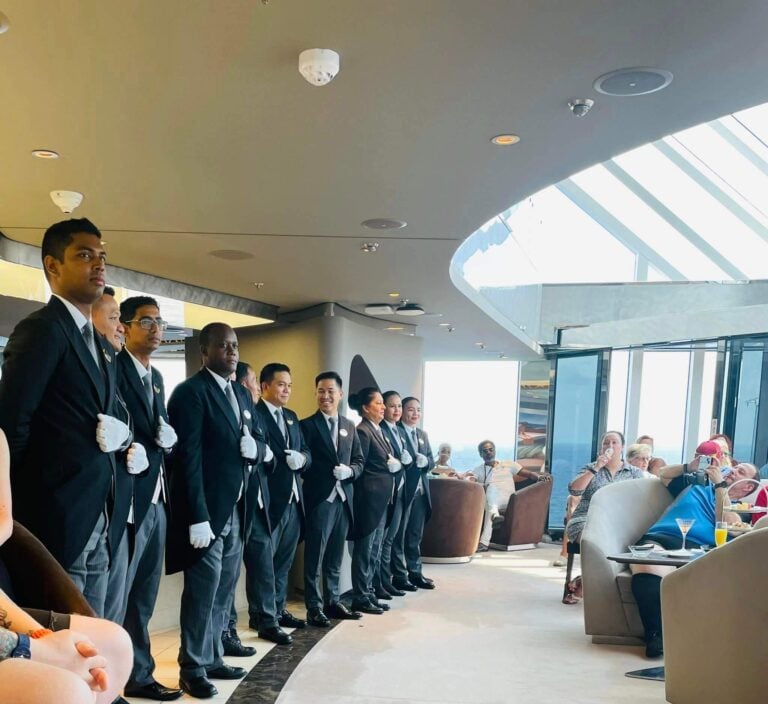
Most cruise passengers want to be good guests. They say thank you, keep their cabin reasonably tidy, and try not to make extra work for the people looking after them.
But a few habits that seem considerate can have the opposite effect onboard.
That doesn’t mean every crew member feels the same way. People have their own preferences, and different ships have different routines.
Still, these are seven situations where good intentions can get in the way of the job.
1. Building a Tower of Plates to Help Your Waiter

Dinner is finished, so everyone passes their plates to one end of the table.
Bread plates go on top of dinner plates. Silverware gets tucked somewhere in the middle, with a little sauce left between the layers.
It looks helpful. Until someone has to lift it.
A waiter needs a stack they can carry safely, especially through a busy dining room on a moving ship.
An uneven pile, or a knife hidden between two plates, can make that harder. The same goes for a coffee cup balanced on top of a bowl.
Leaving your dishes accessible is usually enough. Move your phone or sunglasses out of the way, and let the waiter collect things in the order that works for them.
And if they ask you to pass a plate? Of course, pass it. There’s a difference between helping when asked and assembling a small ceramic skyscraper.
2. Stripping the Bed Before You Leave
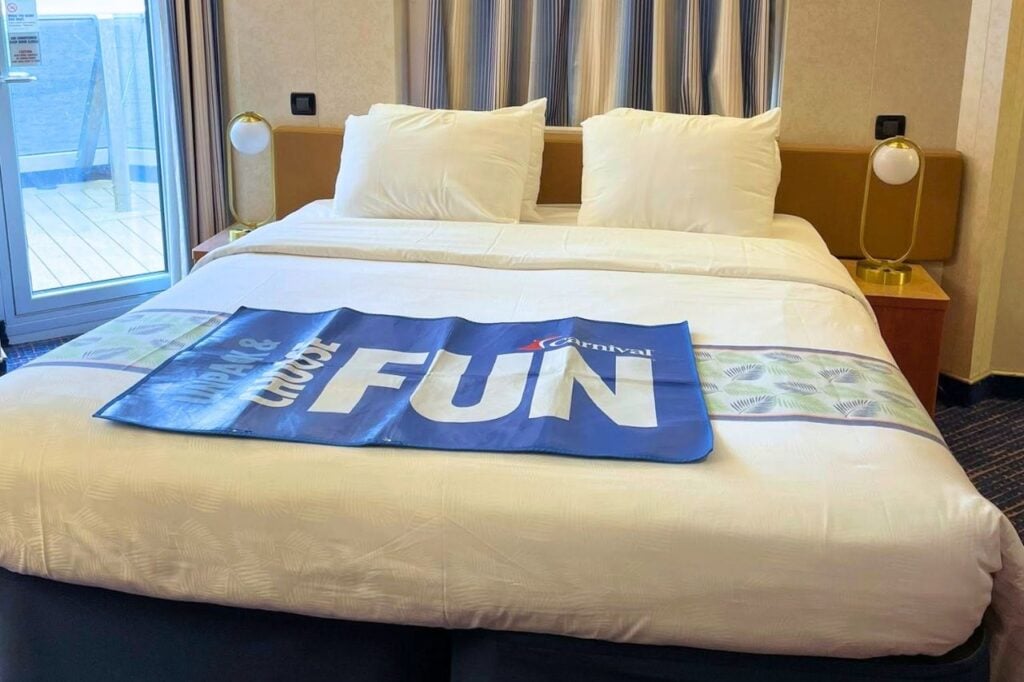
On the last morning, some passengers pull off the sheets, remove the pillowcases, and bundle everything together. It feels like a thoughtful farewell to the cabin steward.
The trouble is that a stripped bed isn’t necessarily a time-saving bed.
Your steward may have a particular order for checking the bedding, separating items, and collecting linen. A tight bundle of sheets and towels can mean more sorting before anything else gets done.
It also makes it easier for a sock or a child’s small toy to disappear into the laundry pile.
Unless the cruise line has asked you to strip the bed, leave it as it is. Clear your belongings, put actual rubbish in the bin, and check the drawers, safe, outlets, and space under the bed.
3. Saying “Whenever You Have Time” When You Actually Need Something Soon

Nobody wants to sound demanding. So a passenger asks for fresh towels and adds, “Whenever you have time. No rush.”
Except there is a rush. They need a shower before dinner in half an hour.
Your cabin steward can’t know that unless you say so. And if they have several cabins to finish, an apparently flexible request may reasonably wait while something more urgent gets done.
Being clear about timing isn’t rude. A simple “Would it be possible to have two towels before six?” gives them something useful to work with.
They can say whether that’s manageable, or suggest another option.
The awkward part comes when a supposedly nonurgent request turns into a frustrated follow-up ten minutes later. Better to be friendly and specific from the start.
4. Keeping a Crew Member Talking Because You Want Them to Feel Included
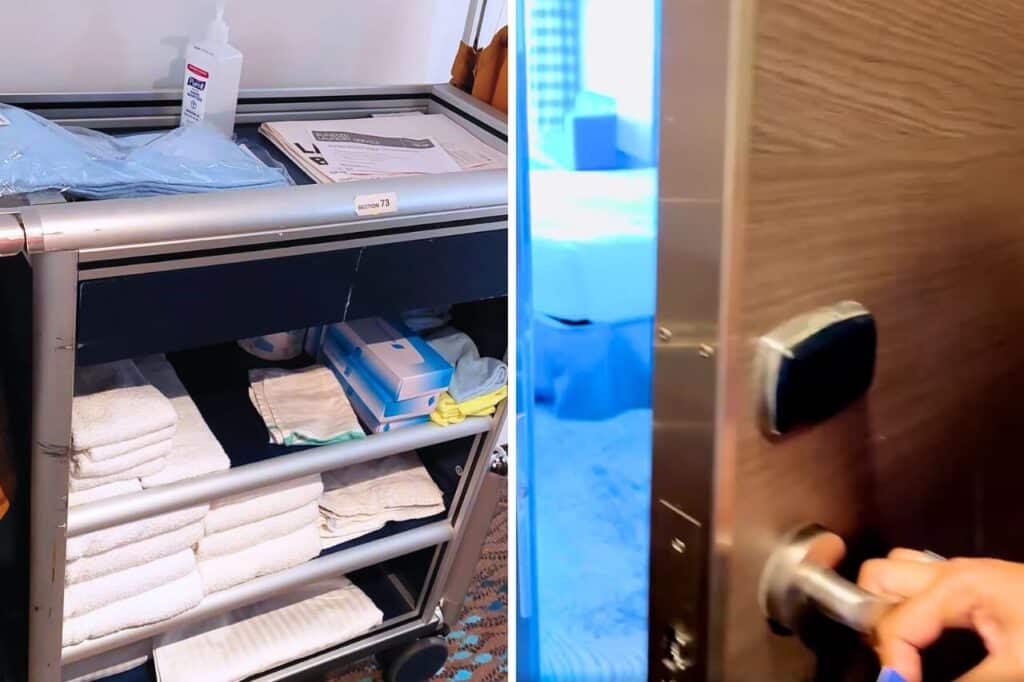
Learning your bartender’s name or having a quick chat with your cabin steward is part of what makes cruising enjoyable.
But watch what’s happening around the conversation.
If your steward is beside a cart full of supplies, with several cabin doors still ahead, a long chat means the work waits.
At a busy bar, the person talking with you may also be watching drink orders build up behind your shoulder.
Crew members can be warm and interested while still needing to move on. Both things can be true.
Keep conversations easy to leave. A quick greeting and a little room for them to get back to work can be more considerate than another question.
If they have time and want to continue, let them take the lead.
And remember that personal questions deserve some care. Being friendly doesn’t require asking about someone’s salary, relationship, or how much money they send home.
5. Staying Quiet About a Problem So Nobody Gets in Trouble

Sometimes the shower doesn’t drain properly, or the cabin doesn’t have enough towels for everyone staying in it.
Some passengers say nothing because they don’t want to cause trouble for the crew.
Then the frustration builds, and the complaint finally comes out on the last night. By then, there’s very little opportunity to put it right.
A calm request gives the crew a chance to help. It doesn’t have to be a complaint about a person.
“The water is collecting in the shower. Could someone take a look?” explains the issue without assigning blame.
The same applies in the dining room. If the wrong dish arrives, mention it politely while it can still be replaced. Eating something you didn’t order and later saying dinner was disappointing doesn’t help anyone much.
6. Leaving Gifts That Become Another Thing to Deal With

A passenger gets along well with their steward and wants to leave something nice.
Perhaps an opened bottle of wine, leftover snacks, or a bulky souvenir bought in port.
It’s a kind thought. But the gift may not be useful to the person receiving it.
Crew accommodation has limited room, and individual tastes vary. Food can raise questions about ingredients or whether it’s safe to eat.
Alcohol isn’t something everyone wants, either, and workplace rules may affect what can be accepted.
Ask before leaving a physical gift, particularly food or drink. Don’t assume something becomes a treat simply because it would otherwise go in your suitcase or the bin.
A sincere thank-you is welcome without taking up any space, and if you want, you can add a cash tip.
7. Going in for a Hug or Touching Them to Show Appreciation
A passenger may feel close to a favorite server or cabin steward after a wonderful week.
A hug on the final night can seem like the warmest possible thank-you. But physical contact should never be assumed.
Crew members come from many cultures, and personal boundaries vary.
Some may be completely comfortable with a hug. Others may prefer a handshake, or no physical contact at all.
Because they are at work and expected to keep guests happy, it can be difficult for them to step back without worrying that they appear rude.
The same goes for touching a crew member’s arm to get attention, pulling someone into a photograph, or placing an arm around them before asking.
None of these actions are necessarily meant badly. They can still make someone uncomfortable.
Ask before taking a photo or offering a hug. Better still, let the crew member set the tone. A sincere thank-you and a positive comment card can carry plenty of meaning without putting anyone on the spot.