
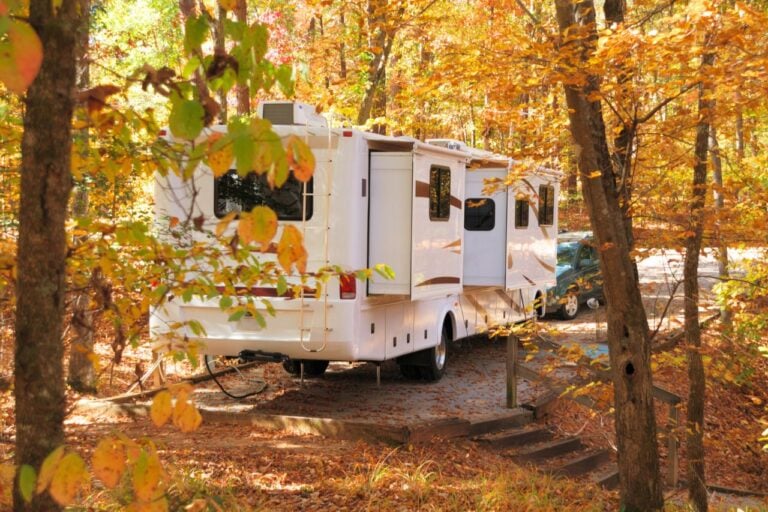
There’s a point in the camping season when an extra blanket starts earning its space in the car or RV. And suddenly that sunny campsite looks much more appealing than the shaded one.
Fall camping has its own rhythm. And for campers who don’t mind pulling on a jacket before breakfast, it can be the best part of the year.
The tricky bit is choosing where to go. Some destinations put on a spectacular leaf show, while others finally cool down enough for a comfortable afternoon hike.
Summer ending doesn’t always mean the crowds disappear, either.
From New England forests to red-rock country, these seven destinations give you a good reason to leave the camping gear out a little longer.
1. Great Smoky Mountains National Park, Tennessee and North Carolina
The Smokies make a strong case for taking the scenic route.
A drive that should be fairly quick can turn into an afternoon of pulling over, getting out, and deciding the next overlook deserves a stop too.
The changing elevations help stretch out the fall color season. Trees higher up turn first, while lower and middle elevations often put on their strongest display from mid-October into early November.
That gives you some flexibility if one area is already past its best.
For camping, Cades Cove is a lovely choice if you enjoy open valley scenery, historic buildings, and a slower pace once you’re back at your site.
Its campground operates year-round, although that doesn’t mean every service stays the same throughout the year.
One thing to plan around: October traffic! Cades Cove is popular for a reason, so leave room in the day for a slow drive. A very slow drive, sometimes.
2. White Mountain National Forest, New Hampshire
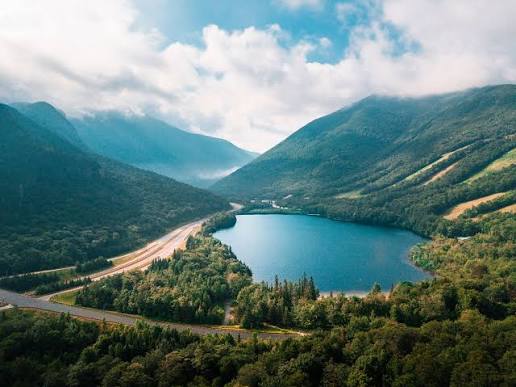
For the classic New England version of fall, the White Mountains are hard to leave off the list.
Forested slopes, winding roads, and enough changing leaves to make even a routine drive feel like part of the trip.
The Kancamagus Highway is a natural starting point. You can spend the day moving between overlooks and short walks, then return to camp without needing a huge itinerary.
Hancock Campground sits at the western end of the highway, near Lincoln, with wooded sites and access to nearby hiking opportunities. It’s a useful base if you want the forest setting with town supplies within reach.
Give yourself some breathing room here. Trying to squeeze every viewpoint into one day takes a lot of the pleasure out of it.
And pack for the mountains. A pleasant afternoon at camp tells you very little about conditions higher up, so check the forecast for the actual hike you’re planning.
3. Shenandoah National Park, Virginia
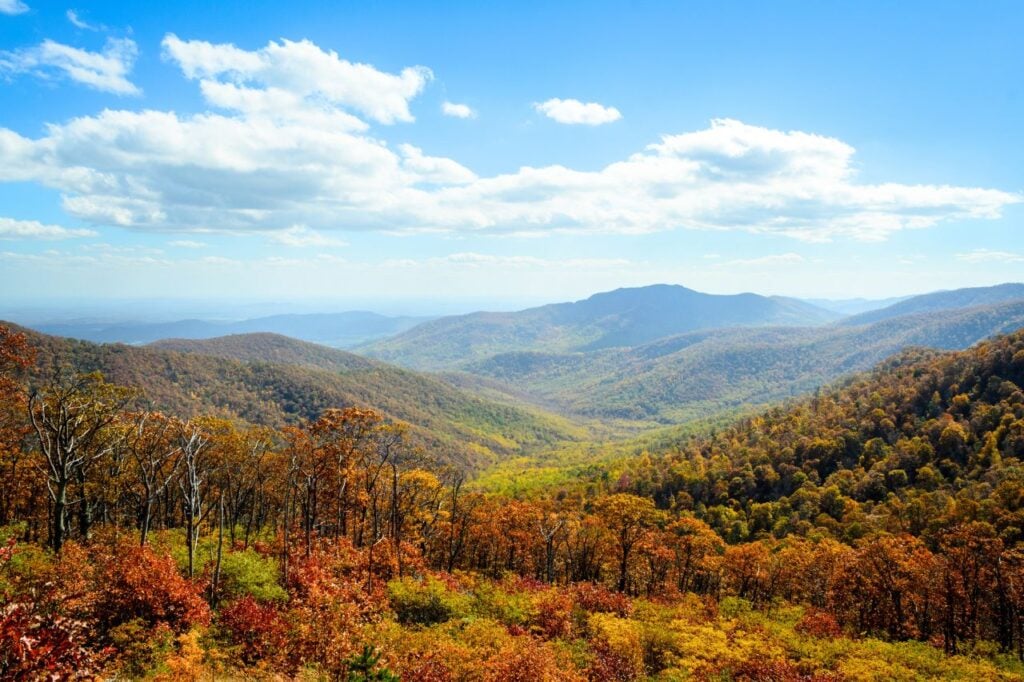
Shenandoah suits campers who want beautiful scenery without making every day a major expedition.
Skyline Drive gives the trip a simple structure: drive a little, stop for a view, take a walk, then see how the afternoon feels. There’s no need to fill every hour.
Fall in the park generally stretches from late September through November, although the best color depends on elevation and the year’s weather.
Big Meadows Campground is a practical base, with a central location near the meadow, Byrd Visitor Center, and several popular park destinations.
It operates seasonally, so check its closing date before building a late-fall trip around it.
The temptation is to spend all day chasing overlooks. But leave some time to sit at camp, too. A warm meal tastes especially good after the temperature drops, even when dinner is just something cooked in one pot.
4. Acadia National Park, Maine
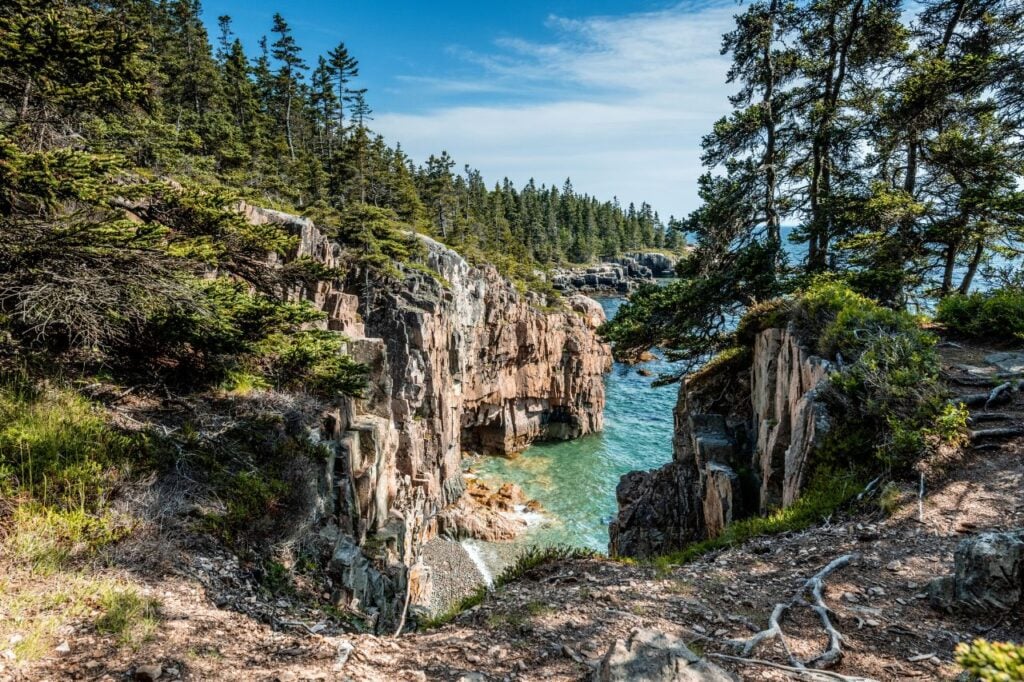
Acadia brings something different to a fall camping trip: the ocean!
You can spend part of the day looking at autumn color, then head toward the rocky shoreline and watch waves roll in. The mix gives the trip more variety than a foliage-only getaway.
The park’s fall colors usually peak around mid-October, though the timing shifts from year to year.
Blackwoods Campground is a good option to investigate, with a location on the eastern side of Mount Desert Island, south of Bar Harbor.
Pay close attention to dates here. Blackwoods is seasonal, and off-season camping isn’t allowed once it closes. A beautiful late-October forecast doesn’t change that.
Also, don’t picture a campsite overlooking the surf just because you’re camping in Acadia. Choose your site for the camping setup you need, then make the coast part of your daytime exploring.
Pack a windproof layer. Extra layers are among the 10 things people often forget to pack for camping.
5. Devil’s Lake State Park, Wisconsin
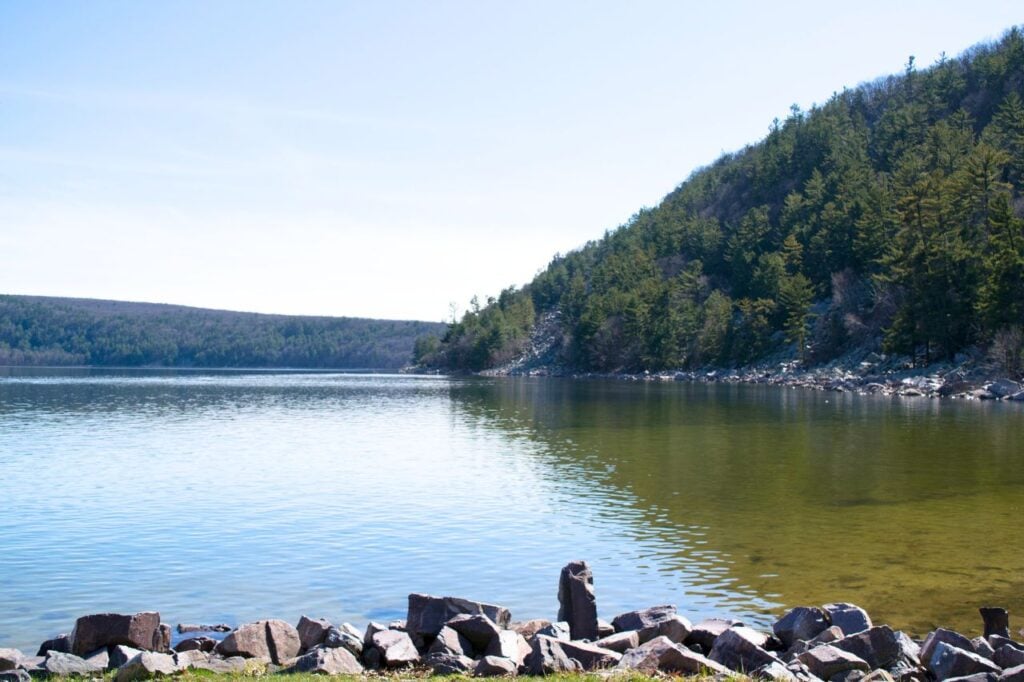
Devil’s Lake deserves a spot on a fall camping list, especially for anyone planning a Midwest getaway.
The lake sits below dramatic quartzite bluffs, giving you wide views that feel like a proper reward for the climb.
Add changing leaves around the water, and there’s plenty of reason to linger.
You can build a satisfying weekend around a bluff hike, time near the shoreline, and an unhurried evening back at camp.
Quartzite Campground stays open year-round, while Northern Lights and Ice Age campgrounds typically close in October. An important detail: the campsites aren’t within sight of the lake, so don’t book expecting waterfront views from your chair.
Later in fall, check the available facilities carefully. Water taps, shower buildings, and dump stations have seasonal shutdowns.
Assuming the facilities will have everything you need is one of the bathroom mistakes that can ruin a camping trip.
6. Zion National Park, Utah
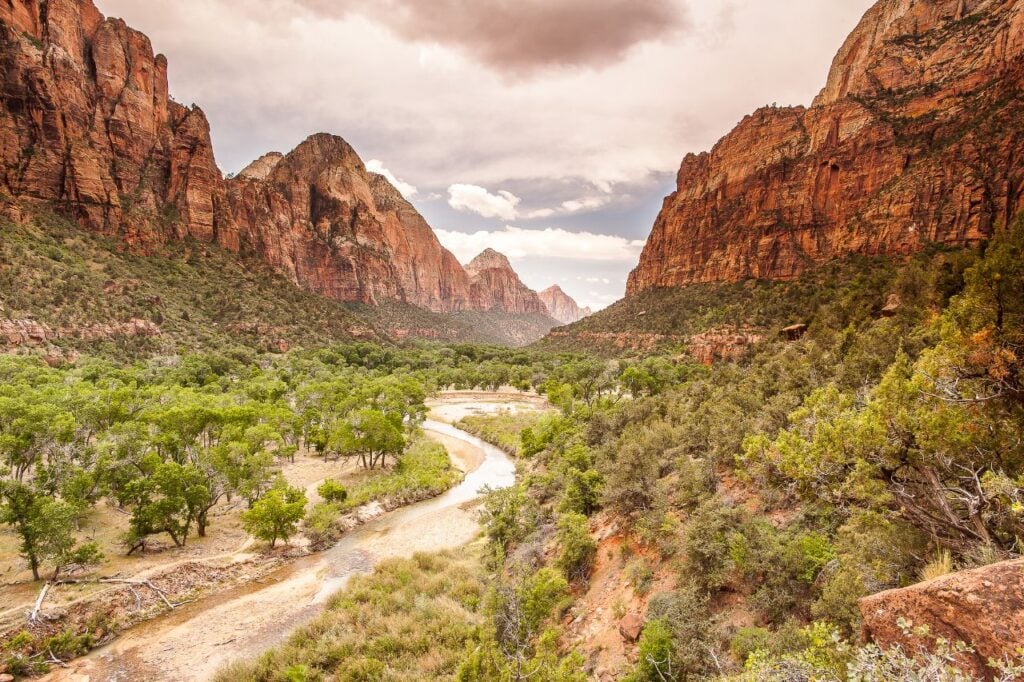
Zion gives fall camping a different color palette. Red cliffs fill the skyline, with autumn color arriving among the canyon’s trees later in the season.
Fall color works down from higher elevations and generally reaches Zion Canyon in late October and early November.
That makes Zion worth considering when northern foliage trips are winding down.
Watchman Campground is a practical place to start your search. It’s near the visitor center and pedestrian entrance, with Springdale close by for supplies or a meal when cooking at camp loses its appeal.

The campground is typically open year-round, though individual loops can close seasonally or for maintenance. Check the specific site details before reserving, especially if you’re bringing an RV.
Once you get there, take a few minutes to go through the 7 things you should always check when arriving at a campground before getting settled.
7. Joshua Tree National Park, California
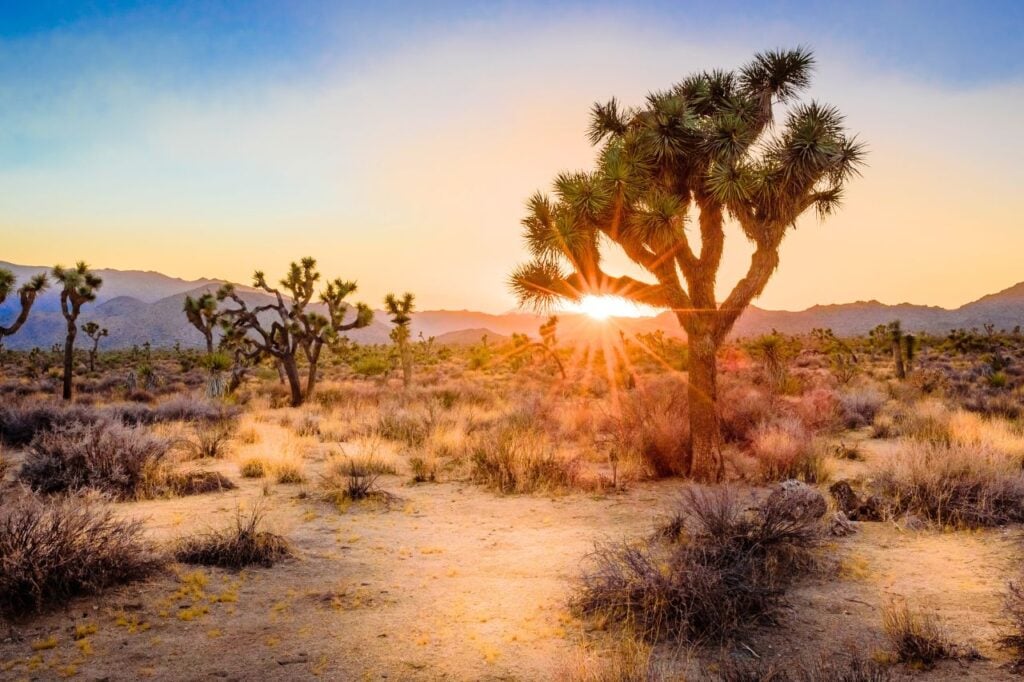
Not every fall camping trip needs a canopy of orange leaves.
Joshua Tree earns its place with desert scenery, unusual trees, big rock formations, and evenings that make you want to keep the camp chair out after dinner.
Consider October or November for this trip, while checking the forecast for your particular campground.
Black Rock Campground is one option for tent campers and RV travelers, but check the individual site’s dimensions.
The campground has a maximum RV length of 35 feet, and some sites accommodate less.
There’s another detail that catches people out: fall is a busy camping season here!
The park warns that campgrounds usually fill up on weekends from October through May.
So reserve ahead where possible. A spontaneous desert weekend sounds lovely until you’re still searching for somewhere to sleep after sunset.
Keep in mind that conditions vary across the park, and a warm daytime forecast is no reason to leave the extra bedding at home. Bringing the wrong sleeping setup is one of the 10 camping mistakes almost everyone makes.