
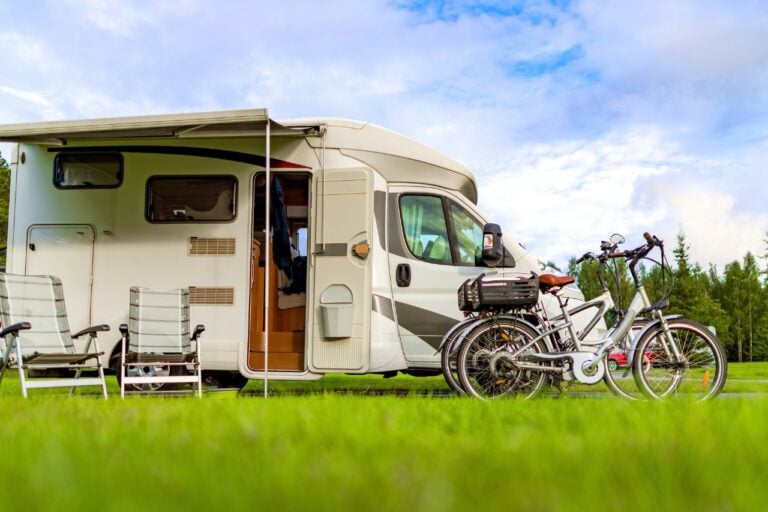
RVs are funny little homes. They look roomy when you’re packing from the house, and then about 20 minutes after you pull into the campground, suddenly every shoe, bag, jacket, charger, and snack wrapper has somehow taken over the whole place.
If you’ve camped in an RV even a few times, you learn pretty quickly that not everything belongs inside.
Some things make a mess. Some things smell. Some things attract bugs. And some things just turn your nice cozy camper into a crowded storage unit on wheels.
Here are 10 things I really think you should never bring inside your RV, or at least think twice about before you do.
1. Muddy Shoes
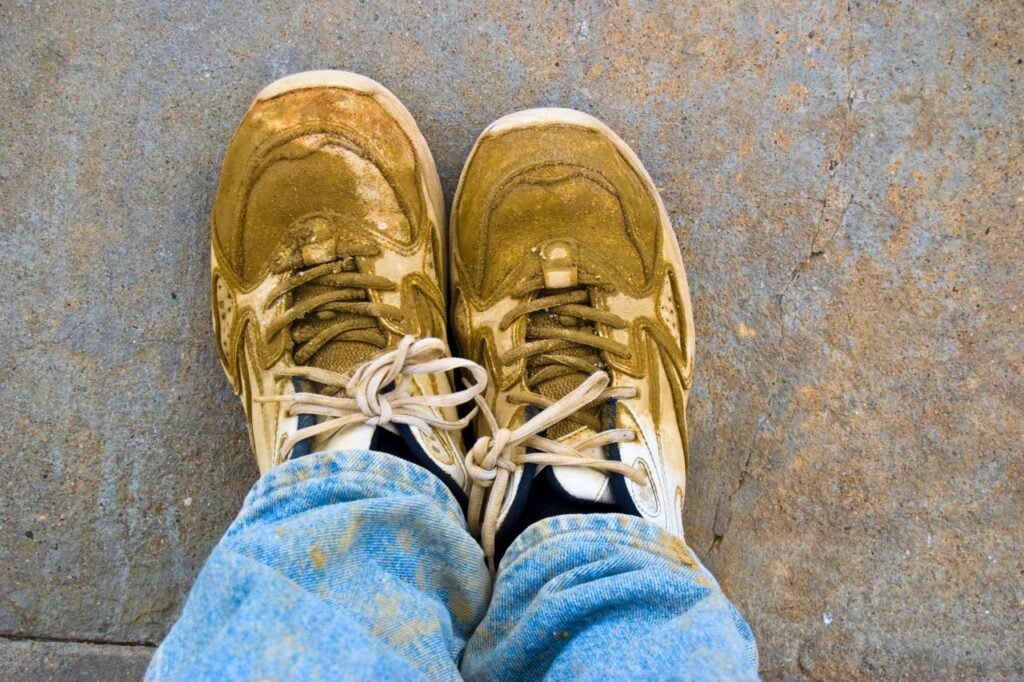
This one seems obvious, but honestly, it’s one of the biggest RV mistakes.
A little mud outside becomes a whole disaster inside.
RV floors are small. That means one dirty pair of shoes can track mud from the door to the kitchen to the bathroom in about five steps. And if you have kids, dogs, or both, well, good luck.
I always try to keep a small shoe mat or bin near the door. Dirty shoes stay outside, under the awning, or in a storage compartment if the weather is bad.
2. Wet Towels From the Lake or Pool
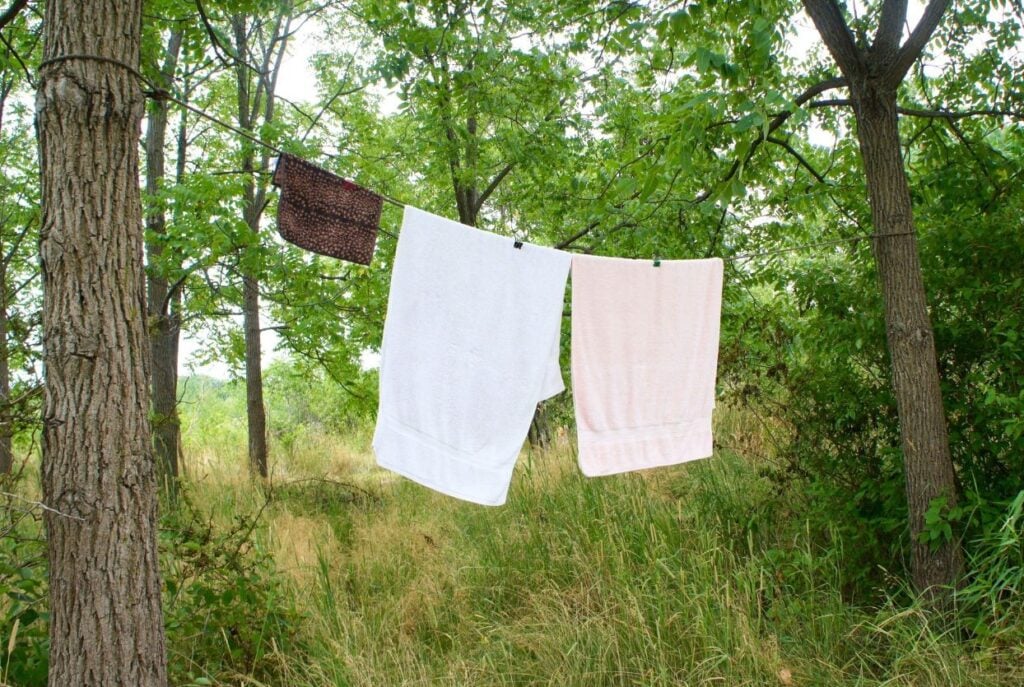
Wet towels inside an RV are trouble.
They seem harmless at first. You toss one over a chair, another on the bed, maybe one on the bathroom door. Then later the whole RV smells damp and weird.
RVs don’t always have great airflow, especially when the weather is humid. Wet towels can make everything feel clammy fast.
Hang them outside when you can. Use a drying rack, ladder, picnic table, or whatever works. Just don’t pile them inside in a corner and pretend they’ll dry.
3. Open Food Bags
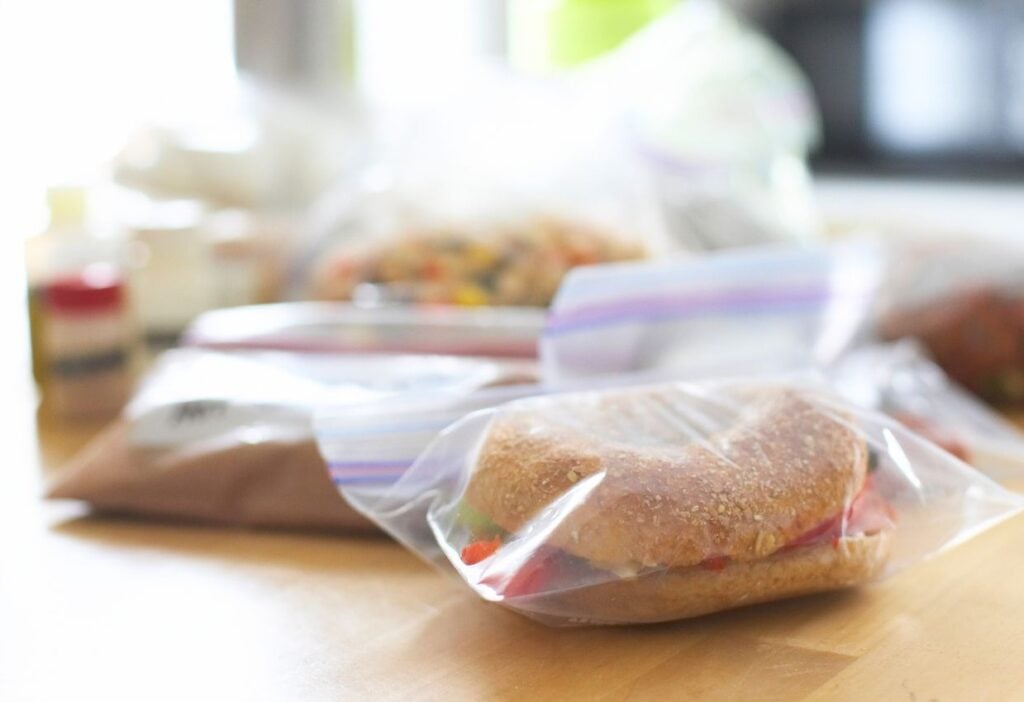
Chips, cereal, marshmallows, bread, crackers. All the good camping stuff.
But open food bags inside the RV can really attract bugs. Ants especially seem to know exactly when someone forgot to close the cookie bag.
I’ve learned this one the annoying way.
Anything open should go into a sealed container or a zip bag. It keeps food fresher, too, so it’s not just about bugs.
Also, mice can be a real thing at some campgrounds. People don’t like talking about it, but yep, it happens.
4. Firewood
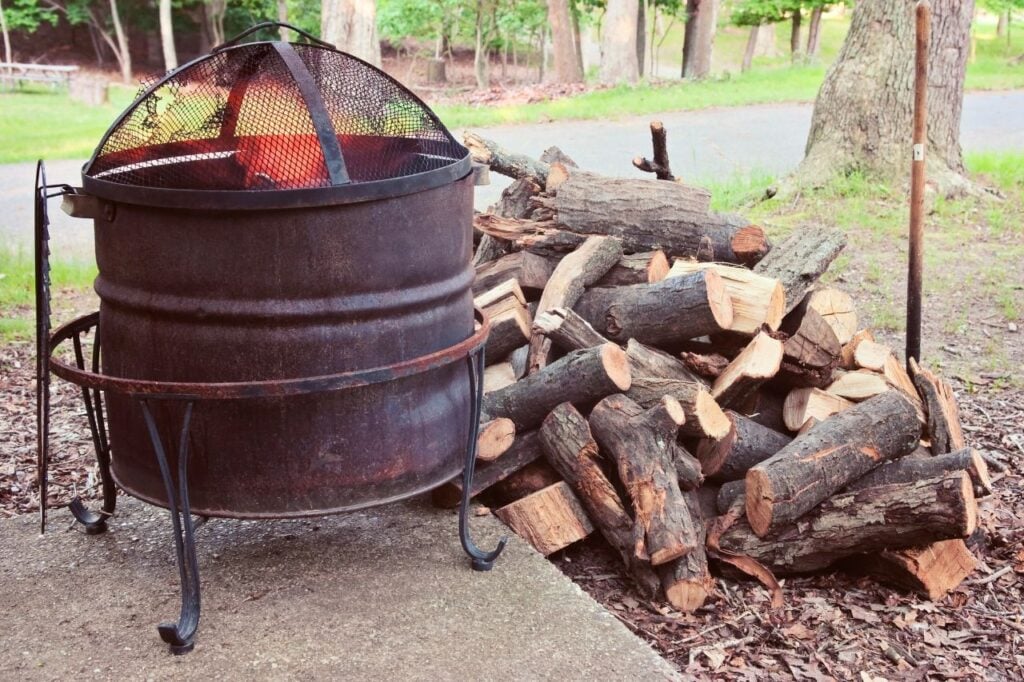
Firewood belongs outside. Period.
It’s dirty, it sheds bark everywhere, and sometimes little bugs are hiding in it. You don’t want to bring ants, beetles, spiders, or who knows what else into the RV just because you wanted the wood close by.
Even “clean” firewood is usually not that clean.
Keep it outside under a cover, in a bin, or near the fire pit if allowed. If it rains, cover it with a tarp.
5. Too Many Clothes
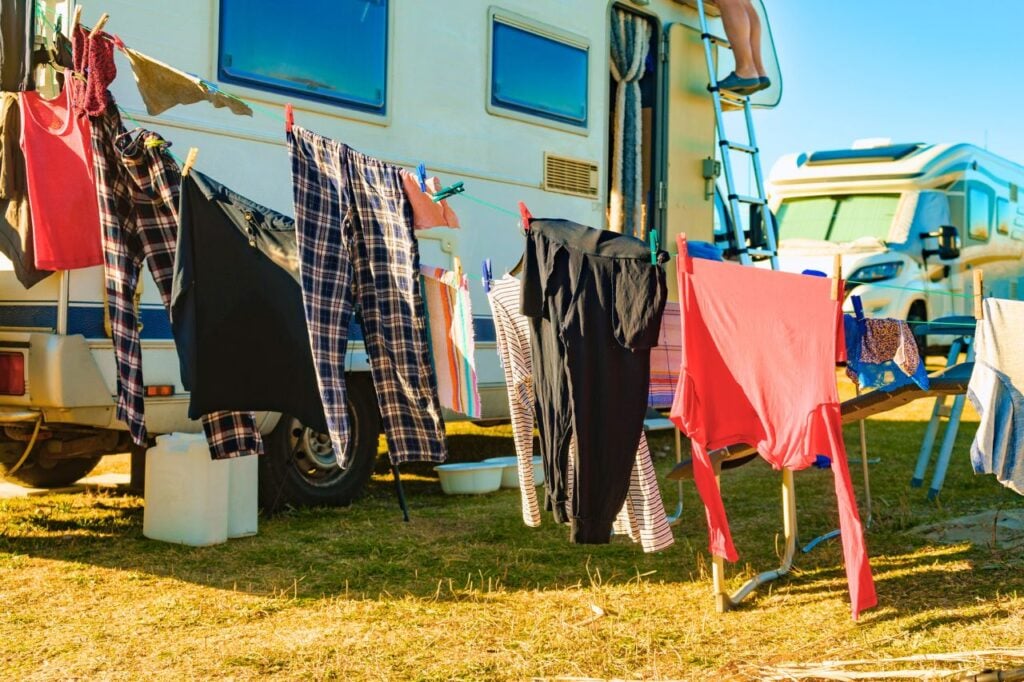
This is one of those things almost every RV camper does at least once.
You pack like you’re going on a 3-month expedition, even though it’s a weekend trip two hours from home.
Extra hoodies, extra jeans, five pairs of shoes, backup outfits for backup outfits. Then half of it never gets worn, but it still takes over the cabinets.
RV storage fills up fast. And once clothes start spilling out of bags, the whole camper feels messy.
It’s one of the reasons why experienced campers eventually stop packing this unnecessary stuff.
6. Strong-Smelling Trash
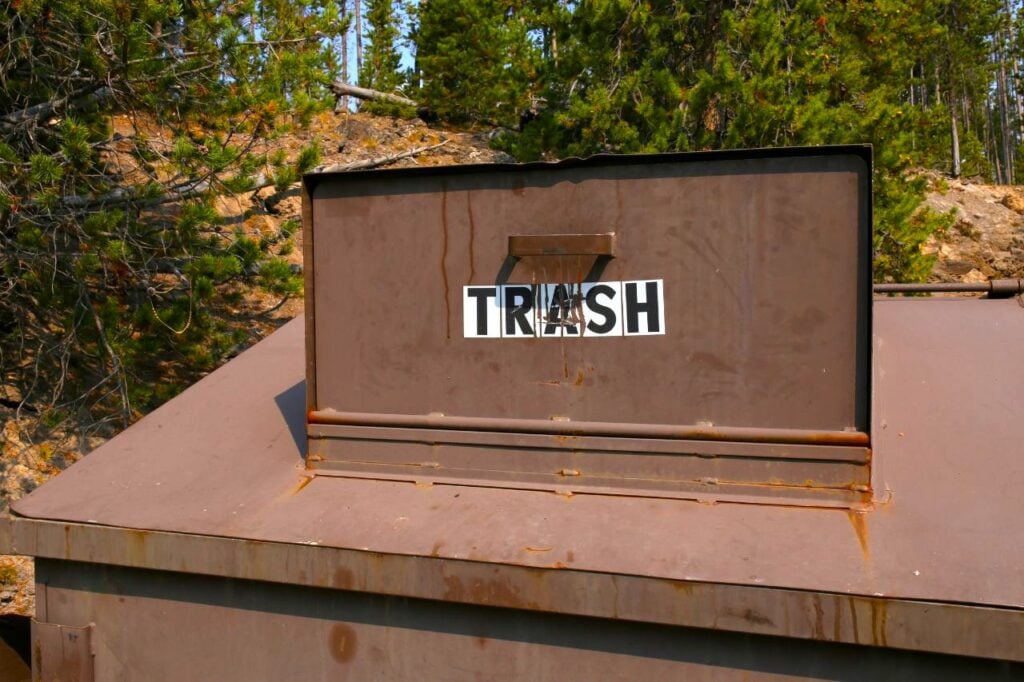
Trash should not sit inside an RV for long, especially food trash.
Meat packaging, banana peels, seafood containers, greasy paper plates, onion scraps. That stuff can make a small RV smell terrible in no time.
I know it’s annoying to take trash out often, but it’s better than waking up at 2 a.m. wondering what died under the sink.
Use small trash bags and take them to the campground dumpster regularly. If you’re boondocking or there’s no trash area nearby, double-bag the worst stuff and keep it somewhere secure.
And whatever you do, don’t simply leave the bags outside overnight. Trash is one of the things you should never leave outside your RV overnight, especially where animals are active.
7. Gas Cans or Fuel Containers
This should really stay outside in proper storage.
Gas cans, fuel containers, and anything with strong fumes should never be brought into the living area of an RV. Besides the smell, there are safety concerns too.
RVs are small enclosed spaces. Fumes can build up, and that’s not something to mess with.
If you carry fuel for a generator or other gear, store it properly and follow the safety instructions. Use the right container, keep it sealed, and keep it away from heat and flames.
And if that fuel is for a generator, remember that many campgrounds now have specific generator rules and restricted hours.
8. Outdoor Rugs That Are Soaked or Dirty
Outdoor rugs are great at a campsite. They make the whole setup feel cleaner and more homey.
But once they’re soaked, muddy, or full of leaves, they don’t belong inside.
I’ve seen people roll up a wet outdoor rug and shove it just inside the RV door “for now.” Then later it leaks dirt and water everywhere.
Let it dry outside first. Shake it out. Brush it off. Then store it where it actually belongs.
An outdoor rug is supposed to keep the mess out, not bring the whole campground floor inside with you.
9. Bulky “Just in Case” Gear
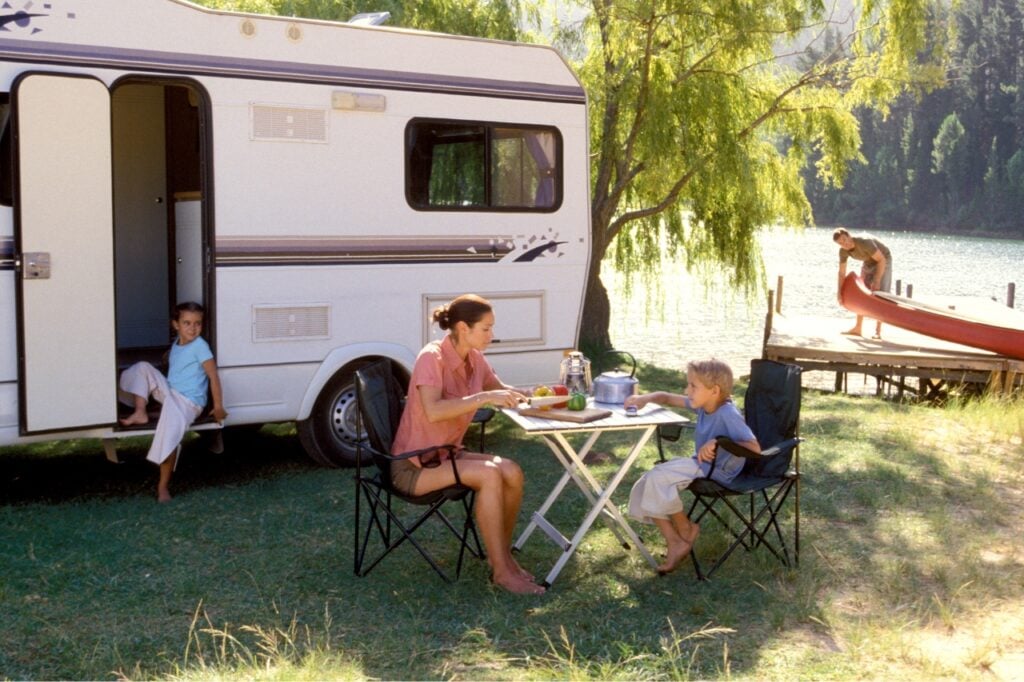
Every camper has a few “just in case” items.
A spare chair. Extra lantern. Backup blanket. Random tool kit. Another cooler. A folding table you might use but probably won’t.
One or two of these are fine. But too much just-in-case gear can ruin the inside of an RV.
The problem is that RVs need breathing room. You need space to walk, cook, sleep, and not stub your toe on a bag every ten minutes.
If something has not been used in the last few trips, ask yourself if it really needs to come inside.
A lot of camping is learning what you actually use, not what you imagine you might use during some perfect emergency moment.
It also helps to know which camping essentials people actually tend to forget, instead of filling the RV with random backups.
10. Anything You Don’t Want Smelling Like Camper
This sounds silly, but RVs have their own smell.
Not bad, usually. Just… camper smell. A mix of wood, fabric, road dust, campfire smoke, coffee, sunscreen, and whatever was cooked last night.
So don’t bring in things that easily absorb smells unless they need to be there.
Extra pillows, fancy jackets, paper shopping bags, clean laundry. They can all pick up that RV smell after a while.
Keep the inside simple. The fewer extra things you bring in, the easier it is to keep the RV fresh.
And honestly, simple camping feels better anyway. The best RV trips usually happen when the inside stays clean, cozy, and not too crowded.
And if you want to make the whole setup easier from the start, these things you should always do as soon as you arrive at the campground can help keep your RV cleaner and more organized.