
Arriving at a campground is one of the best parts of the trip. You’ve finally finished the drive and can already picture yourself sitting outside with a drink while dinner cooks nearby.
But before you pull out the chairs and start relaxing, there are a few things you really should check.
I’ve learned that the first 15 minutes at a campsite can make a huge difference. Checking a few important details first can prevent a lot of problems later.
Some of these checks take less than a minute. So here are seven things I always recommend checking when you arrive at a campground.
1. Check the Ground Before Parking Your RV
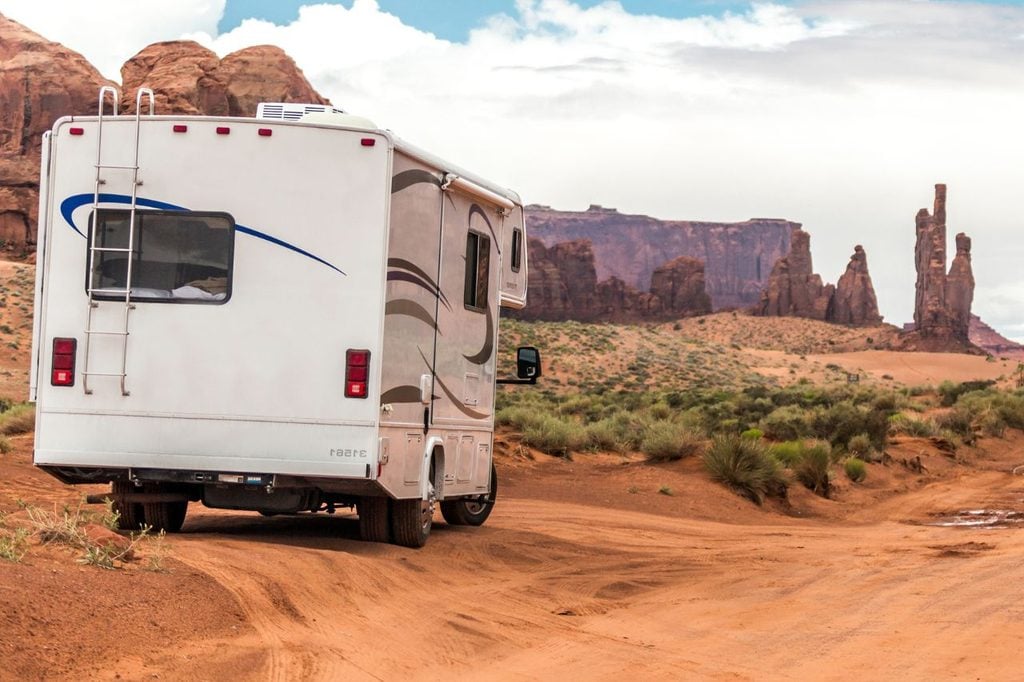
Before backing your RV into the site, get out and walk around.
Yes, even if the campsite looks perfectly fine from the driver’s seat.
Look for deep holes, large rocks, soft patches of soil, exposed roots, and areas where water has collected.
A site can appear level from a distance while actually having a fairly noticeable slope.
You should also look above you. Low branches can scrape the roof, damage an air-conditioning unit, or catch on an awning.
Tree branches are especially difficult to judge while you’re concentrating on backing into a narrow space.
If you’re traveling with someone, have them stand outside and guide you.
Take your time. There is no prize for parking your RV faster than everyone else.
2. Check How Level the Site Really Is
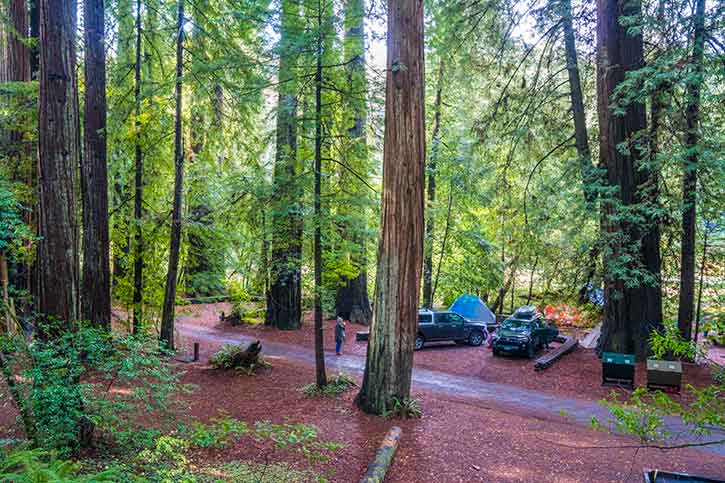
Once your RV is in position, check whether it’s level before completing the rest of your setup.
A slightly uneven floor might not sound like a major issue, but you’ll probably notice it later.
Doors may swing open, items can slide across counters, and sleeping at an angle is surprisingly uncomfortable.
More importantly, some RV refrigerators work best when the vehicle is reasonably level.
Depending on the type of refrigerator you have, operating it on a steep angle may affect its performance or potentially cause damage.
Use a small bubble level or the leveling system built into your RV. A phone app can also give you a rough idea, although I prefer having a real level with me.
Tent campers should check the slope too. Try to position your tent so your head will be slightly higher than your feet while sleeping.
3. Inspect the Electrical Connection
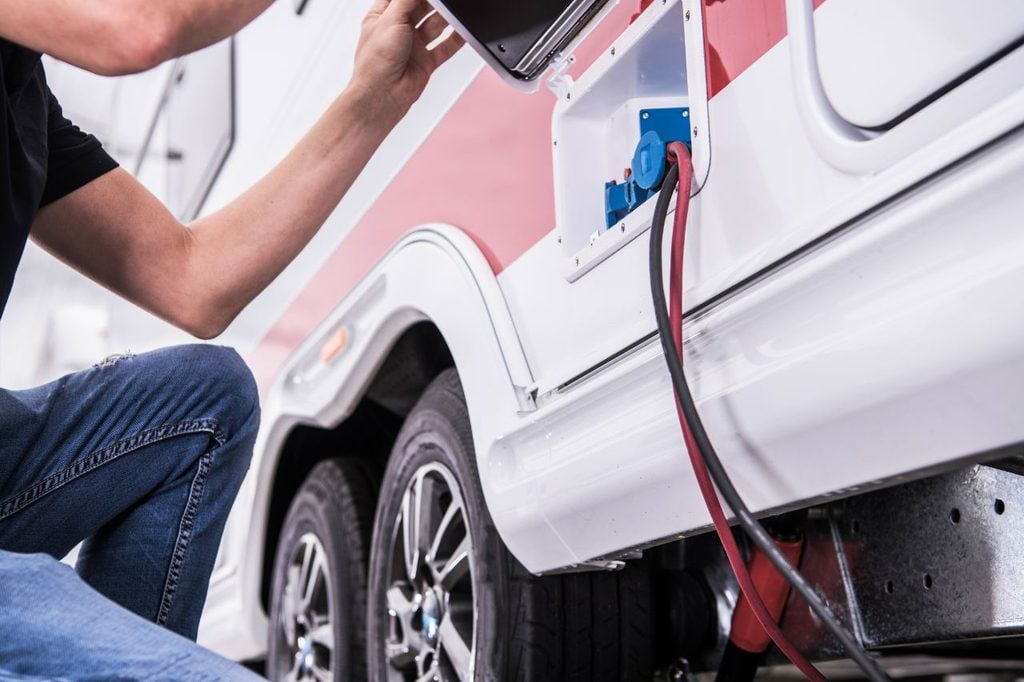
Never assume that a campground power pedestal is safe just because it looks normal.
Before plugging in, check for burn marks, cracked outlets, loose connections, exposed wires, or anything that appears melted.
If the pedestal looks damaged, do not use it. Contact the campground staff and ask them to inspect it or move you to another site.
It’s also a good idea to use a surge protector with an electrical management system.
This can detect problems such as low voltage, high voltage, reverse polarity, and an open ground.
Some campers skip this because a good surge protector isn’t exactly cheap. I understand that.
But compared with the cost of replacing damaged appliances or electrical equipment inside an RV, it starts to look like a very sensible purchase.
And please… if something doesn’t look right, don’t try to fix the campground’s electrical equipment yourself. Let the staff handle it!
4. Check the Water Before Connecting

Campground water quality can vary quite a lot, even within the same campground.
First, inspect the spigot. Look for leaks, rust, damage, or dirt around the connection.
I also like to run the water for several seconds before attaching the hose. This helps flush out water that has been sitting in the pipe.
Pay attention to its color and smell. If the water is cloudy, discolored, or has a strange odor, speak with campground staff before using it.
Make sure you are connecting to the correct water source as well. A potable water connection should be clearly identified. Never assume that every faucet at a campground provides drinking water.
Use a drinking-water-safe hose rather than an ordinary garden hose.
A water-pressure regulator is another small item worth carrying, since campground pressure can sometimes be much higher than an RV’s plumbing system can safely handle.
Many RV owners also use an inline filter. It won’t solve every possible water issue, but it can improve the taste and remove some sediment.
5. Inspect the Sewer Hookup
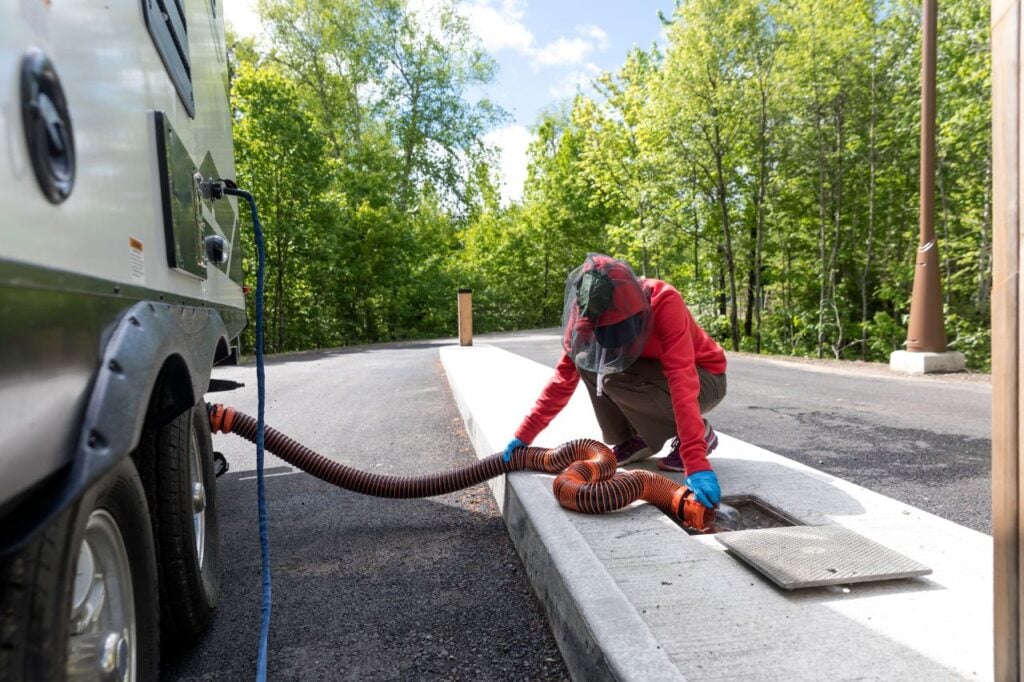
The sewer connection is not the glamorous part of camping, but it deserves your full attention.
Check that the connection is secure, in usable condition, and close enough for your sewer hose to reach without being stretched too tightly.
Inspect the area for leaks or signs that the previous camper left a mess.
Your sewer hose should slope downward from the RV toward the drain. A hose support can help maintain the correct angle and prevent waste from collecting in low spots.
Make sure the fitting is firmly attached before opening any valves. This sounds obvious, but mistakes happen surprisingly easily when someone is tired after a long drive.
Keep both waste valves closed during normal camping, particularly the black-water valve.
Leaving it open can allow liquids to drain while solid waste remains inside the tank.
That creates a problem you really don’t want to deal with during your vacation.
6. Look for Fire Ants, Wasps, and Other Unwanted Visitors
Before children or pets begin exploring, take a quick walk around the entire campsite.
Check near the utility pedestal, trees, fire ring, and edges of the site.
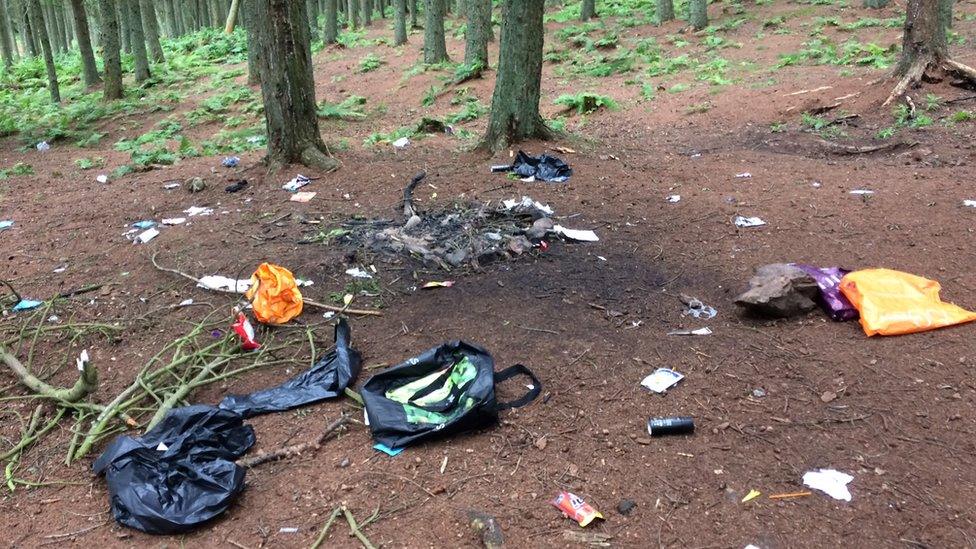
Look for ant hills, wasp nests, poison ivy, animal droppings, broken glass, sharp metal, and anything else that could cause an unpleasant surprise.
Fire ants can be particularly easy to miss if you arrive while it is getting dark. A small mound near your steps or outdoor rug can quickly become a big problem.
Also check inside the fire ring before using it.
Unfortunately, some people throw bottles, cans, food waste, and other rubbish into campground fire pits.
If you have a dog, inspect the area before letting it wander on a long leash. Leftover food, fishing hooks, and bits of trash can be hidden in the grass.
Food and garbage can also attract insects and wildlife, which is why they are among the things you should never leave outside your RV overnight. Don’t forget to check the full list!
You don’t need to be paranoid. Just spend two minutes looking around before everyone starts walking through the site in sandals.
7. Check the Campground Rules and Emergency Information
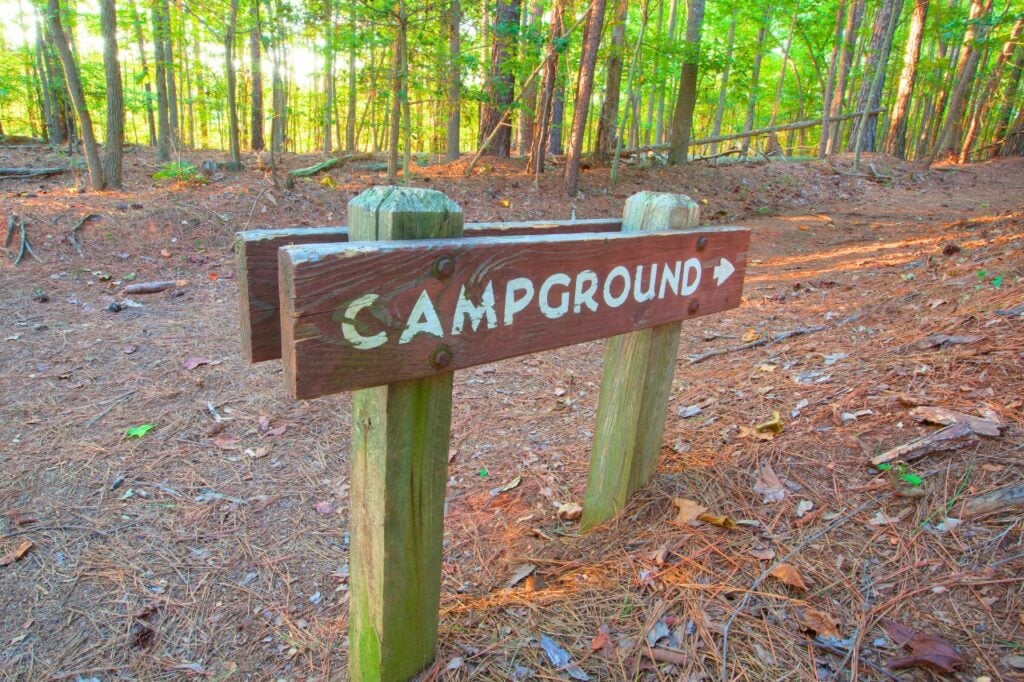
Even experienced campers should review the rules at every new campground.
Quiet hours, generator hours, pet policies, fire restrictions, visitor rules, and vehicle limits are not the same everywhere. In fact, there are several camping rules that many people discover too late.
Something that was allowed at your previous campground may be prohibited at the next one. Some properties are even starting to ban items and activities that were once widely accepted
Find out where the nearest bathroom, storm shelter, emergency exit, and campground office are located. You should also know how to contact someone after the office closes.
Cell service can be unreliable in remote campgrounds, so save any important phone numbers or maps while you still have a signal.
If severe weather is possible, ask where campers are expected to go. An RV is not a safe shelter during a tornado or very strong storm.
This is also a good moment to check the fire restrictions. Never rely on what another camper tells you.
Conditions can change quickly, and a campfire may be prohibited even if there is a fire ring at your site. Fire restrictions are just one of the new camping rules you should know before your next trip
It only takes a few minutes to read the information provided at check-in. Most of it is common sense, but there is usually at least one campground-specific rule worth knowing.