
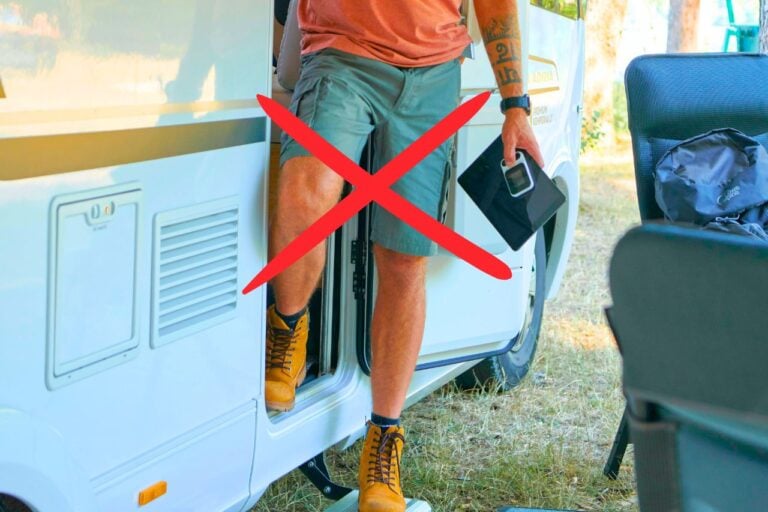
Camping has a funny way of exposing every bad clothing decision you make.
A shirt that feels perfectly comfortable at home can become unbearable after an hour on the trail.
And many people have learned some of these lessons the hard way. More than once, actually.
You don’t need expensive technical clothing to enjoy camping, but you do need to think about comfort, weather, insects, and what happens when the temperature suddenly drops.
Here are 10 things you should never wear on a camping trip, or at least leave at home whenever possible.
1. Brand-New Shoes
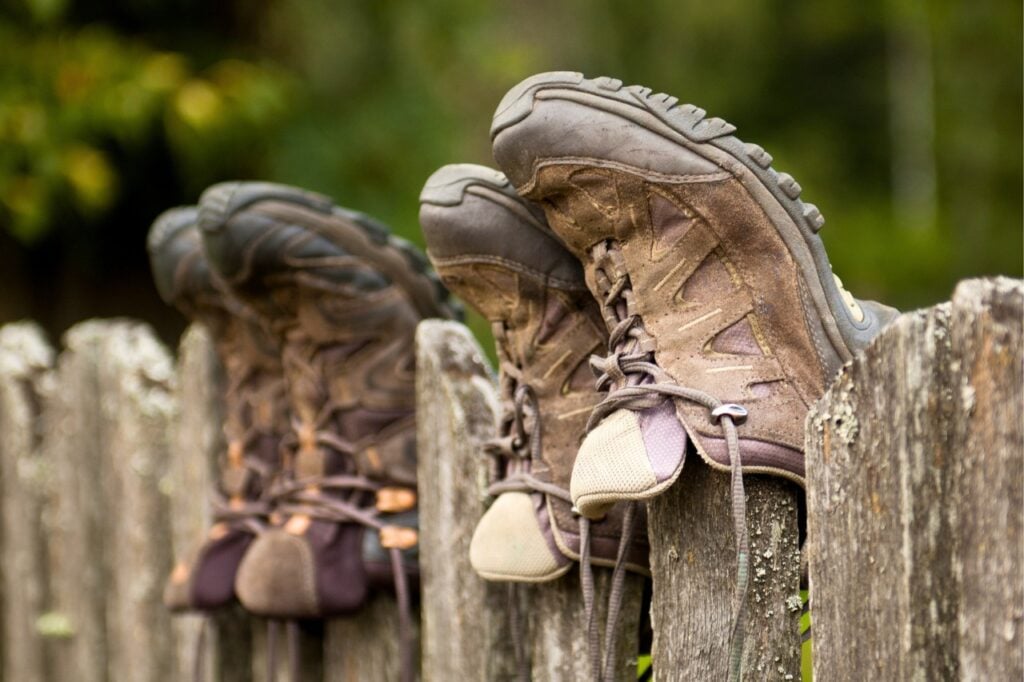
A camping trip is not the place to break in a new pair of hiking boots.
Even good-quality boots can rub against your heels or feel tighter after your feet swell from walking.
I once brought new hiking shoes on a weekend trip because they felt great in the store. By the second afternoon, I was putting bandages on both heels and avoiding any walk that wasn’t absolutely necessary.
Wear your shoes several times before taking them camping. Walk around your neighborhood, climb some stairs, and test them with the same socks you plan to pack.
If they hurt at home, they’ll probably feel much worse on a rocky trail.
2. Flip-Flops as Your Main Shoes
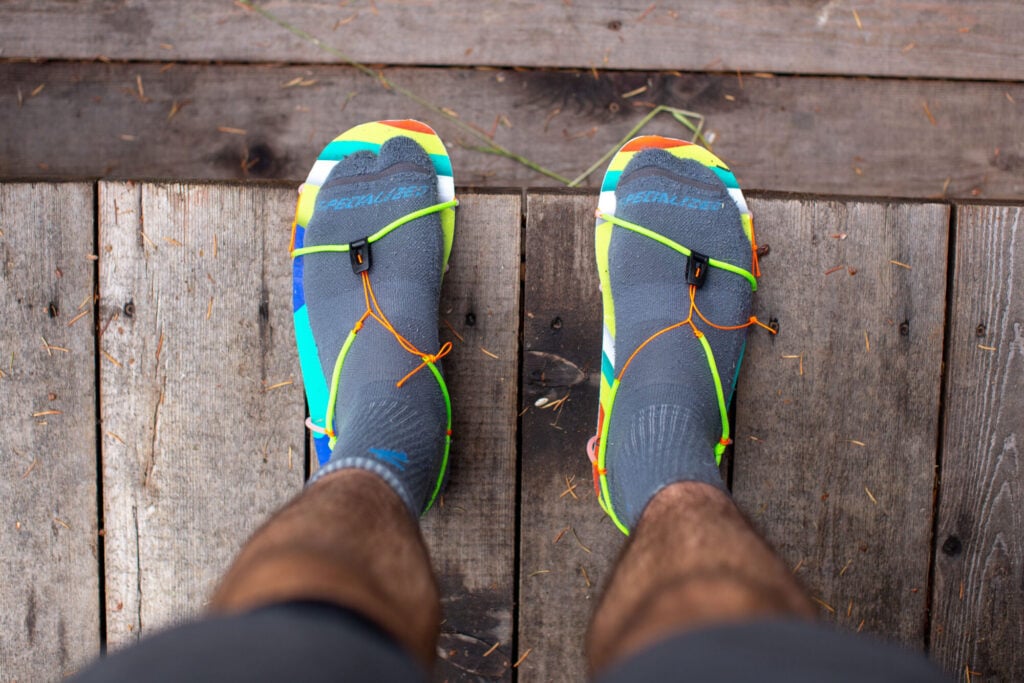
Flip-flops are useful around campground showers, pools, and sometimes inside an RV.
But they should never be your main camping shoes.
They provide almost no protection from sharp rocks, thorns, hot surfaces, insects, or slippery ground. They also have very little support, which becomes obvious after you’ve walked around the campground all day.
There’s another problem people don’t always think about. Flip-flops can come off easily when you’re walking downhill or carrying gear.
Bring supportive sneakers, trail shoes, or broken-in hiking boots instead. Keep the flip-flops for the shower block.
3. Heavy Cotton Clothing in Cold or Wet Weather

Cotton feels comfortable when it’s dry, but it holds a lot of moisture. Once it gets wet from rain, sweat, or even morning dew, it can take ages to dry.
That wet fabric then sits against your skin and pulls away body heat. On a warm afternoon, this may just feel annoying. On a chilly evening or mountain hike, it can become a real (and dangerous) problem.
This doesn’t mean every cotton T-shirt must be banned from the campground. I still wear them on relaxed summer trips when the forecast is dry and I’m not going far from the tent.
For hiking or unpredictable weather, though, quick-drying synthetic fabrics or merino wool are much safer choices.
They manage moisture better and won’t leave you shivering in a damp shirt when the temperature drops.
4. Shorts for Summer Camping
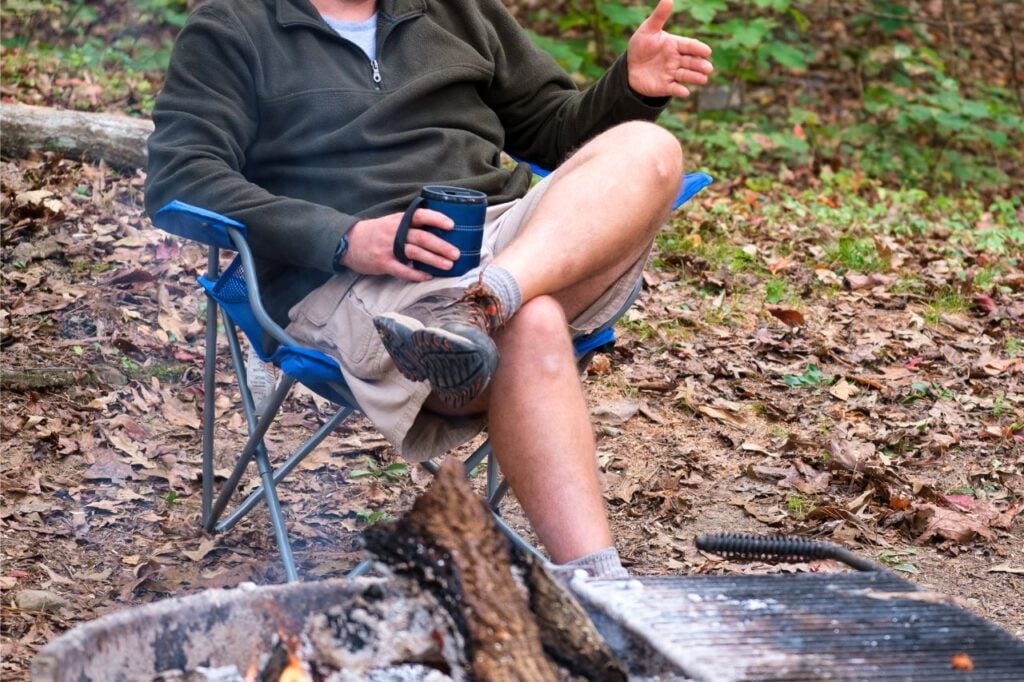
Shorts seem like the obvious choice for summer camping, but they aren’t always the smartest one.
Tall grass, thorny bushes, mosquitoes, ticks, sunburn, and poison ivy can quickly make you wish you had covered your legs.
Even a short walk through an overgrown area can leave you scratched and itching for the rest of the trip.
Lightweight hiking pants are often more comfortable than people expect. Many are breathable, quick-drying, and designed to protect your legs without making you feel too hot.
You can still pack shorts, of course. But if you’re setting up in long grass, collecting firewood, or exploring an unfamiliar trail, you should probably switch to long pants.
A little extra coverage can save you a lot of irritation later.
5. Expensive or Sentimental Clothing
Camping clothes get dirty. That’s part of the experience.
You may end up with mud on your knees, soot near your sleeves, tree sap on your pants, or the lingering smell of campfire smoke in everything you own.
Remember that some stains come out easily. Some really don’t.
Leave expensive jackets, delicate fabrics, and favorite outfits at home. The same goes for anything with sentimental value that you would be upset to damage.
Choose durable clothing that you can wash without worrying too much about it.
It doesn’t need to look terrible, either. There are plenty of practical camping clothes that still look nice.
6. Clothing With Lots of Loose Straps or Dangling Cords
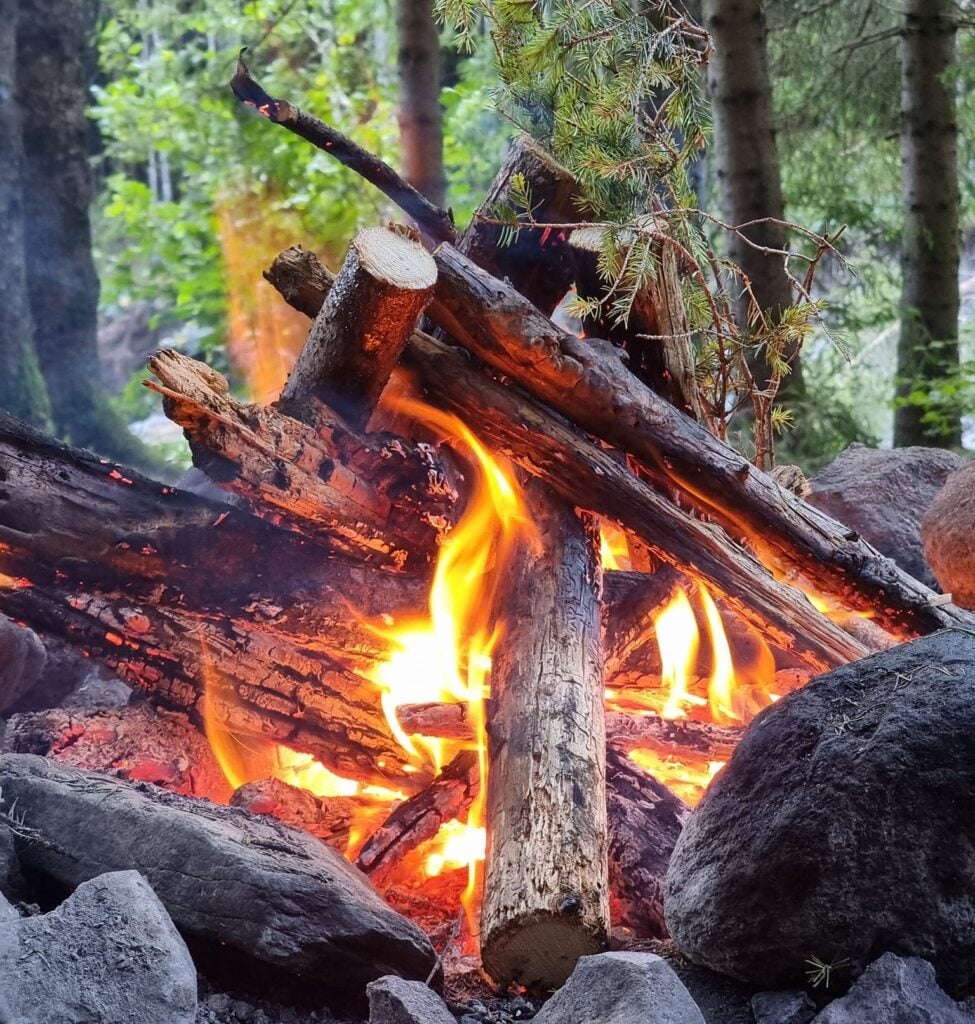
Loose clothing can easily catch on branches, tent poles, cooking equipment, and other things around the campsite.
Long decorative cords and oversized sleeves are especially inconvenient near a campfire.
A sleeve that hangs too close to the flame can become dangerous in seconds. Loose synthetic fabrics may also melt when exposed to heat or sparks.
Wide-legged pants can create similar problems. They drag through mud, collect leaves, and sometimes get caught under your shoes while you’re walking.
You don’t need to wear skin-tight clothes. Just choose items that fit properly and don’t have unnecessary pieces hanging from them.
PRO CAMPING: Around the fire, be extra careful with fleece jackets and other synthetic layers. They’re useful for warmth, but sparks can burn small holes in them.
7. Pajamas as Your Only Nighttime Clothing
There’s nothing wrong with wearing pajamas inside your tent, camper, or cabin. The mistake is assuming you won’t need to go outside after changing into them.
At some point, you’ll probably need to visit the bathroom, check a strange noise, secure something in the wind, or retrieve an item you forgot outside.
Campgrounds never seem as dark as they do when you’re standing there in thin pajamas and unsuitable shoes.
Pack something warm and easy to throw on at night. A fleece, sweatpants, and slip-on shoes with closed toes can make those late-night trips much more comfortable.
Even during summer, nighttime temperatures can drop quickly, especially near lakes, deserts, and mountains.
Keep a jacket and proper shoes beside your bed. You’ll be glad they’re there at 2 a.m., especially when doing these 10 things you should always check before going to sleep at a campground.
8. Denim Jeans
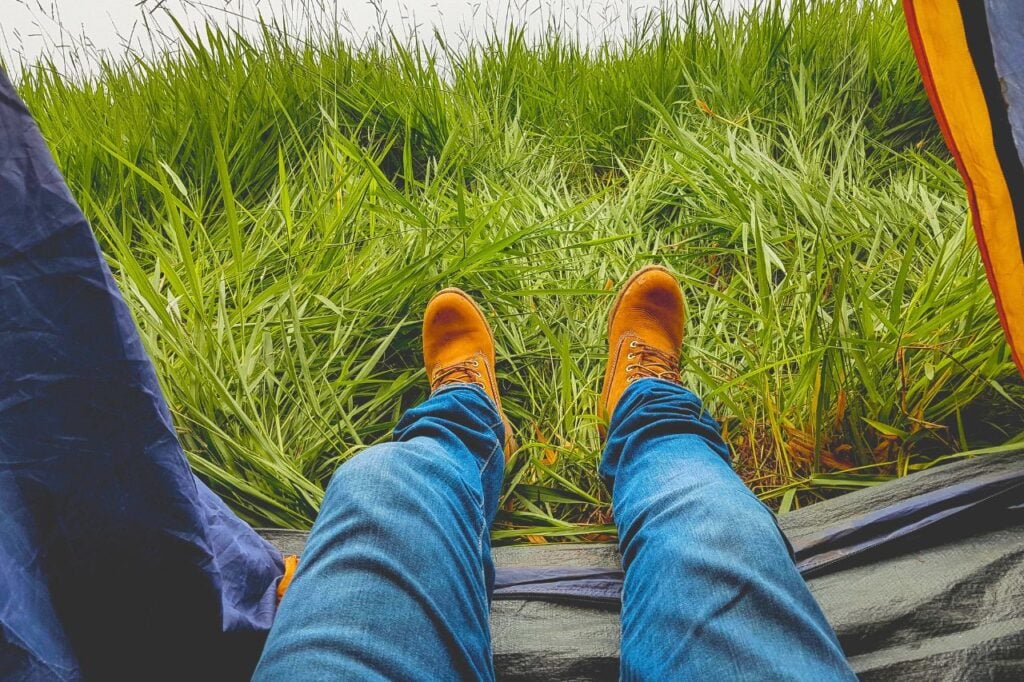
Jeans feel durable, and they are. That doesn’t necessarily make them good camping pants.
Denim is heavy, restrictive, and painfully slow to dry. If your jeans get soaked during a hike, you could be walking around in wet pants for the rest of the day.
They can also become uncomfortable when you’re climbing, crouching to set up a tent or sitting on the ground.
Another problem is packing space. One pair of thick jeans can take up as much room as two or three pairs of lightweight hiking pants.
I sometimes bring jeans for a relaxed evening at a developed campground, especially if I’m not planning to hike. But for active days, lightweight outdoor pants are far more practical. Look for something flexible, breathable and quick-drying.
9. Only One Warm Layer
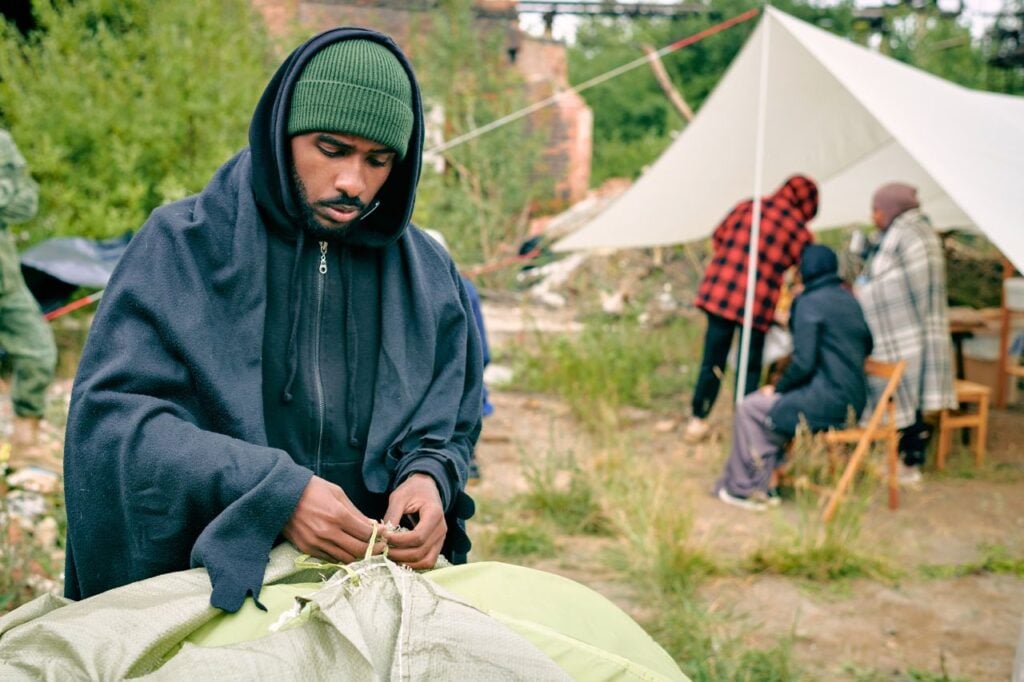
One of the most common camping mistakes is dressing for the afternoon temperature and forgetting how cold the evening may become.
A sunny 75-degree day can turn into a chilly night, particularly in wooded areas or at higher elevations. Add a little wind and suddenly everyone is wrapping themselves in blankets.
Instead of relying on one extremely heavy coat, bring several layers.
A moisture-managing base layer, a warm fleece or sweater, and a wind-resistant outer jacket give you more control as the conditions change.
Layers are also easier to pack and adjust throughout the day. You can remove one while hiking, put it back on during dinner, and add the outer jacket once the wind picks up.
10. Anything You Haven’t Checked Against the Weather
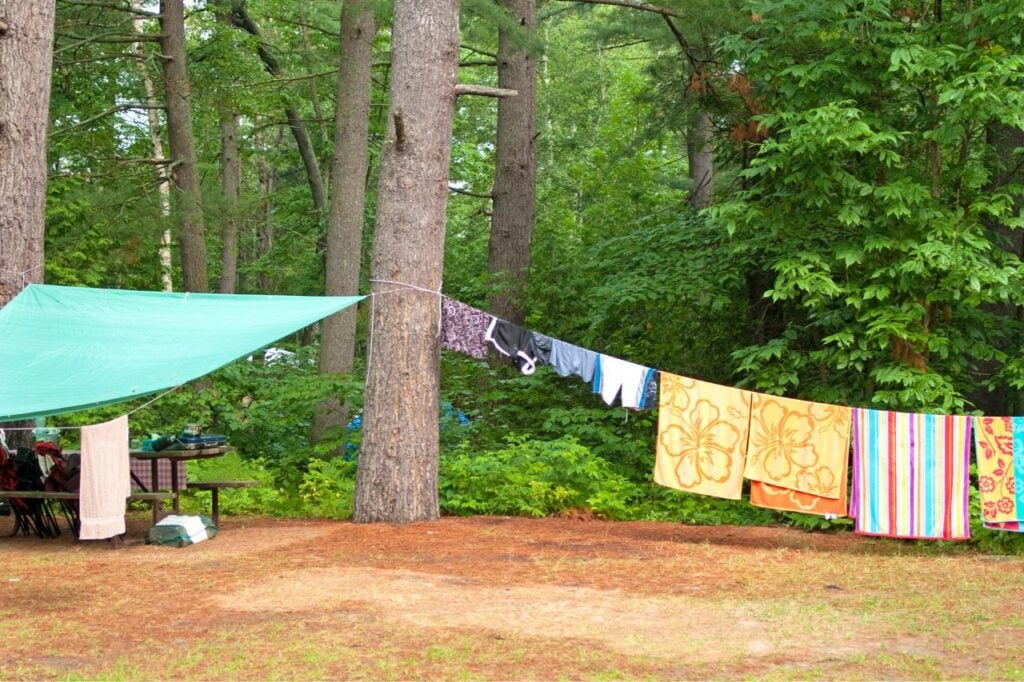
This is probably the biggest one.
Never choose your camping clothes based only on what the weather is doing at home.
Campgrounds can have very different conditions, especially if you’re traveling to the mountains, coast, desert, or another elevation.
Check both daytime and nighttime temperatures. Look at the chance of rain, wind speed, humidity, and any sudden weather changes expected during your stay.
Also remember that forecasts aren’t perfect. A lightweight rain jacket is worth packing even when the chance of rain looks fairly low.
It takes up almost no room, and it’s much better than spending the evening in a wet sweatshirt.
Weather and fire restrictions can change quickly, which is one reason campers should review these new camping rules.
Dress for the Camping Trip You’re Actually Taking
There isn’t one perfect outfit for every camping trip.
What works at a developed campground in July may be completely wrong for a mountain campsite in early spring.
Someone staying in an RV will have different needs from a person hiking several miles to a backcountry tent site.
Still, the basic idea is simple: wear comfortable clothing that protects you, dries reasonably quickly, and can handle a bit of dirt.
Bring broken-in shoes, dress in layers, and prepare for the temperature to change. And don’t wear anything you’d be heartbroken to see covered in mud or dotted with tiny campfire holes.
Camping is much more enjoyable when you aren’t thinking about your clothes the whole time. It also helps to stay informed about the major camping changes rolling out in 2026.