
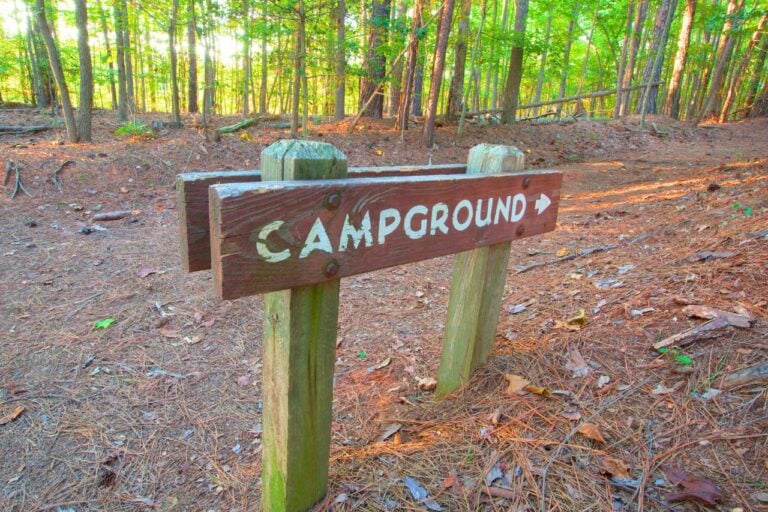
Arriving at the campground feels good.
The long drive is over, the air smells better, and everyone wants to get out of the vehicle right away.
But hold on for a few minutes. What you do right after arriving can shape the rest of your trip.
Before you light the fire or settle into your chair, take care of these ten things.
1. Stop at the campground office
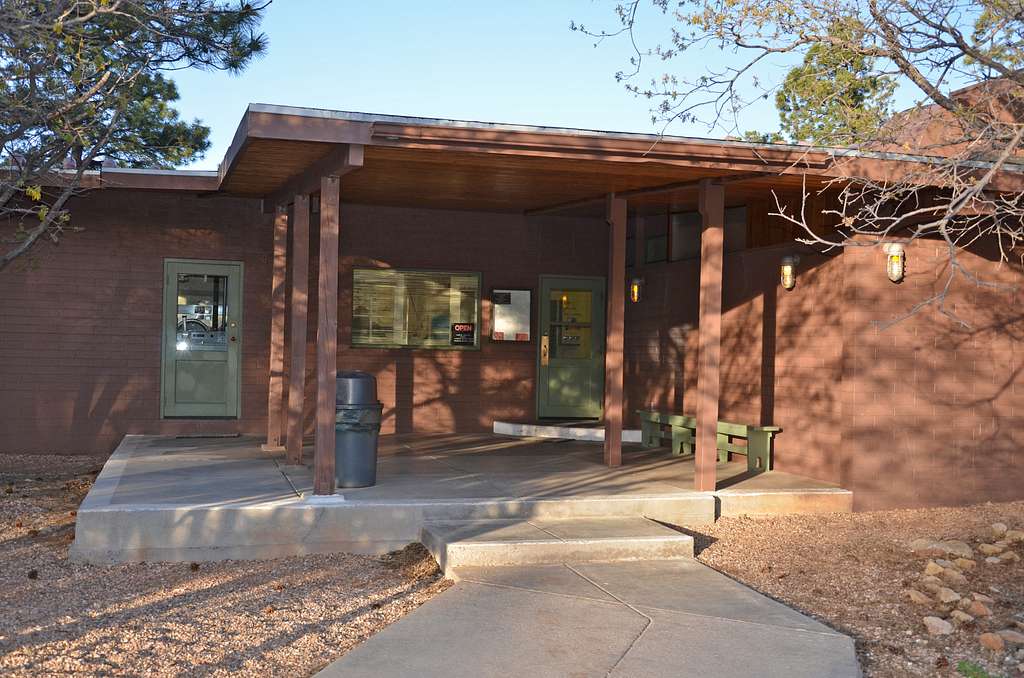
Even when you already have a reservation, check in before heading to your site.
The campground staff may give you a gate code, parking permit, site map, or wristband.
They can also tell you about quiet hours, fire restrictions, checkout times, pet rules, and any areas that are closed.
Do not assume the rules are the same as they were during your last visit. A rule that did not matter last summer could matter today.
Ask where to find:
- The nearest bathroom and shower building
- Drinking water
- Trash and recycling stations
- Emergency exits
- Firewood
- A camp host or staff member
This is also the best time to confirm whether you can have a campfire. Never rely on an old website page or something another camper told you.
2. Read the campground map and rules

Take a minute to find your site, the bathrooms, the dump station, the water spigots, and the campground exit.
Look for an emergency gathering point too, if the map shows one.
Pay attention to quiet hours and generator hours. Starting a generator too early is a fast way to upset everyone nearby.
Check the rules for food storage as well. Campgrounds in bear country often have strict requirements, but raccoons, squirrels, birds, and other animals can cause trouble almost anywhere.
The rules are not there to ruin the fun. Most of them exist because somebody caused a problem before.
3. Walk around the entire site
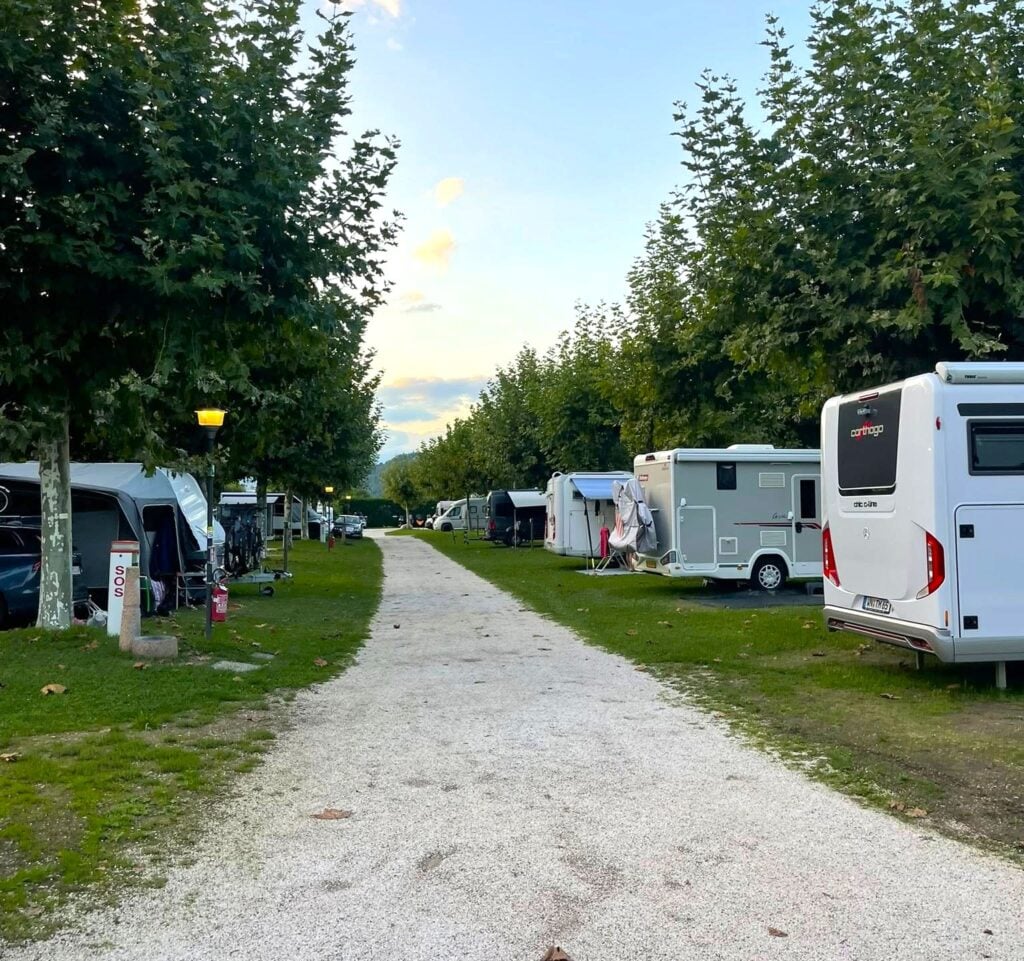
Do not back in, drop the trailer, or throw the tent on the ground as soon as you arrive.
Walk around first. Look for broken glass, nails, sharp rocks, ant hills, low branches, poison ivy, animal waste, and holes in the ground.
Check above you too. Dead or damaged branches can fall without much warning, especially during wind or rain.
If you are staying in an RV, inspect the space around the electrical pedestal, water connection, sewer hookup, and picnic table. Make sure your slide-outs will not hit a tree, post, utility box, or neighboring site.
Tent campers should find the flattest available ground. Avoid dips where rainwater can collect. A spot that looks comfortable in the afternoon can turn into a shallow pond overnight.
4. Check the site number and boundaries
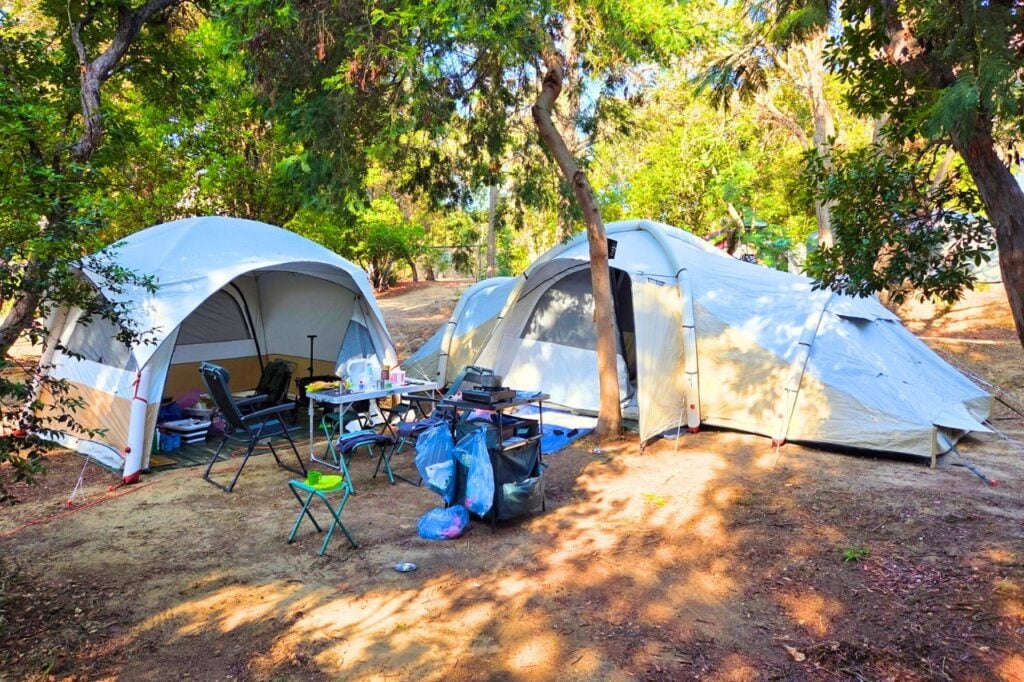
Campground sites are not always marked clearly. Before unloading, make sure you are standing on the correct one.
Then figure out where your site ends.
The fire ring, picnic table, utility connections, and parking pad usually offer clues. Still, some sites sit close together, and it is easy to spread chairs or equipment into the next camper’s space.
Do not move into an empty neighboring site because nobody appears to be using it. The next campers may arrive after dark.
Keep your vehicle, tent, awning, chairs, and other equipment inside your assigned area. Leave roads and walking paths open. Children, cyclists, campground workers, and emergency vehicles need room to pass.
5. Check the latest weather forecast
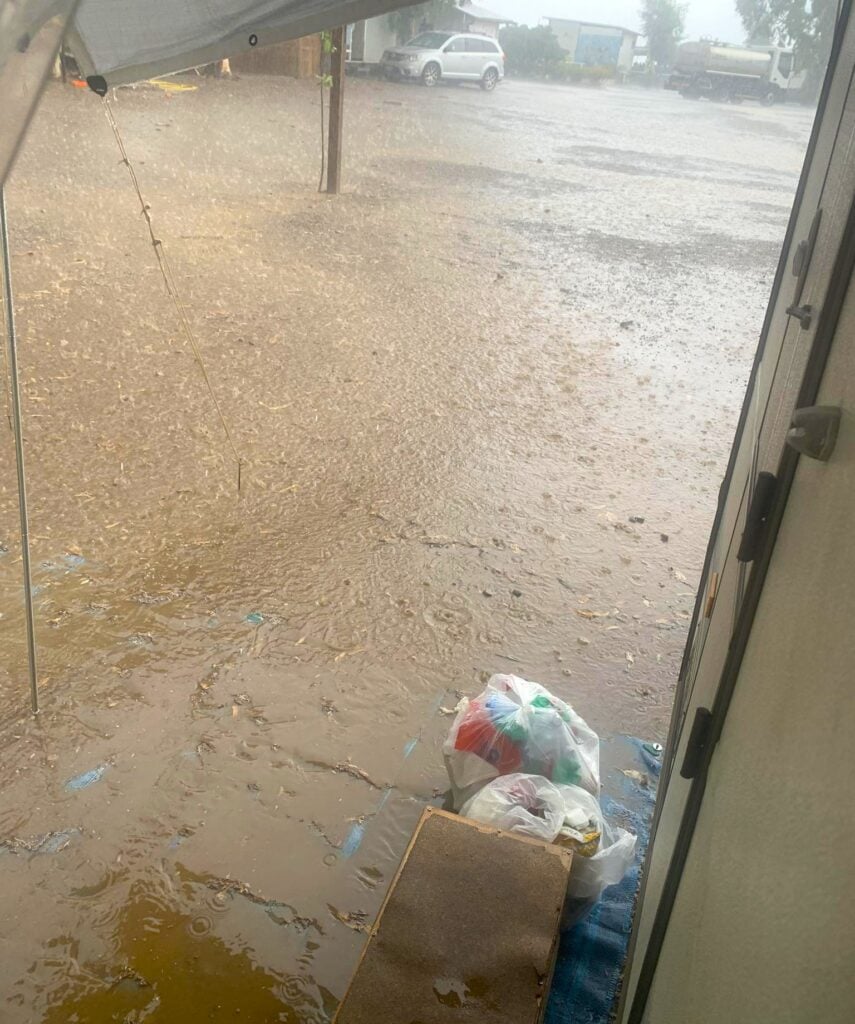
The weather you checked at home may no longer be accurate.
Look at the hourly forecast when you arrive. Check for rain, high winds, thunderstorms, extreme heat, and sudden temperature drops.
In mountain areas, conditions can change much faster than expected.
Also, use the forecast to decide what to set up first.
If rain is coming, pitch the tent and put up the shelter before arranging chairs. If strong wind is expected, secure your awning and canopy.
If a cold night is coming, unpack dry clothing and sleeping gear before darkness falls.
Do not leave an RV awning open when you leave the site. A sudden gust can bend the arms or rip the fabric.
Weather awareness matters even more near rivers and low ground. Find out whether your campsite sits in a flood-prone area and identify the fastest route to higher ground.
Please don’t wait for an emergency alert to start looking at the map.
6. Find the emergency exit and save your location
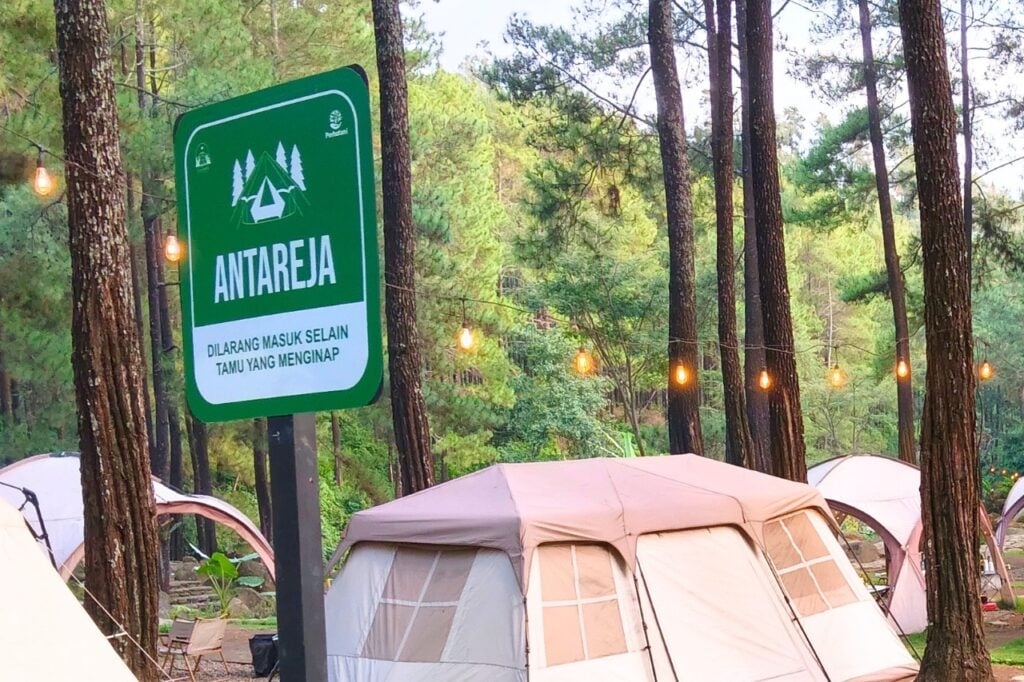
Campgrounds can become confusing at night. Long loops look similar, signs can be hard to read, and phone service is not always reliable.
Save the campground address and your site number in your phone. Send them to everyone in your group.
Then locate the main exit and any emergency exit. Find out where you would go during a wildfire, flood, tornado warning, or medical emergency.
Save the campground office number too. Some campgrounds use a separate number for after-hours problems.
If you have children, show them your site number and a clear landmark nearby.
Tell them to find a campground employee or camp host if they get lost. Don’t tell them to wander around searching for the campsite.
In addition, keep a camping first aid kit somewhere everyone can reach.
Older campers may also want to review these camping tips for people over 50, especially when choosing footwear, planning activities, and moving around uneven sites.
7. Position your RV or tent carefully
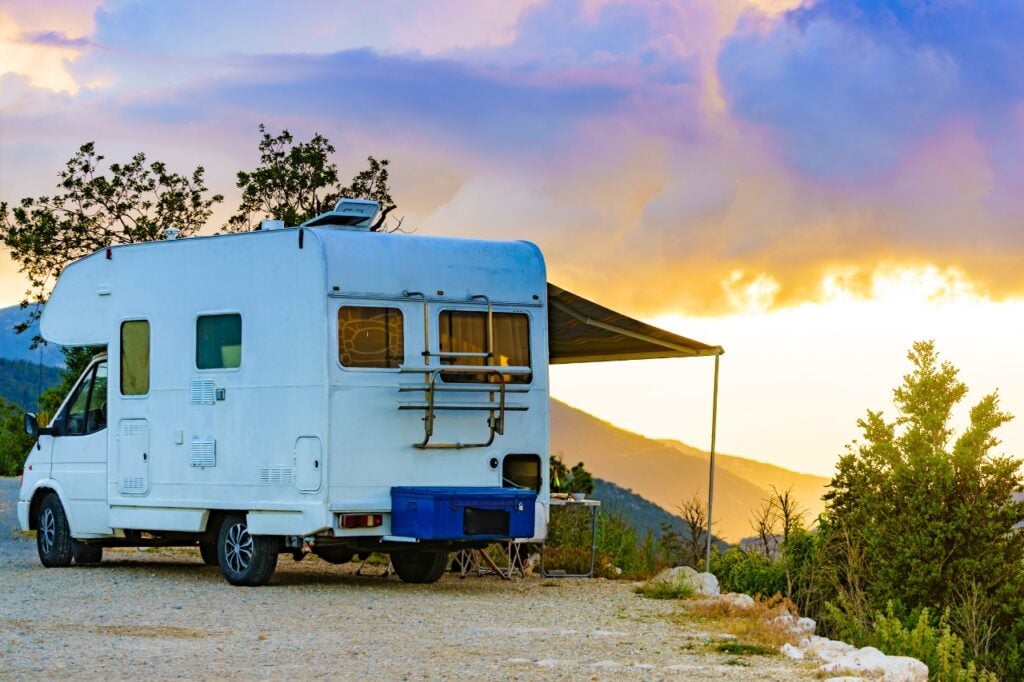
Think about the full setup before you start.
For an RV, check that the utility connections can be reached.
Consider which side receives the afternoon sun and where your awning will open. Make sure the steps do not lead into mud, brush, or a steep drop.
Level the RV before extending slide-outs. Chock the wheels before unhitching. Connect electricity, water, and sewer only after the vehicle sits safely in place.
Tent campers should clear loose sticks and stones without digging up plants or changing the site.
Place the tent on durable ground and keep it a safe distance from the fire ring.
And if it’s late, remember to set up the sleeping area first. Chairs and decorations can wait.
Anyone still shopping for a rig should also avoid these common mistakes people make before buying an RV, including choosing the wrong size or overlooking how the RV will actually be used.
8. Create separate cooking and relaxing areas

Do not let the whole campsite become one messy pile.
Choose a clear place for cooking, eating, sleeping, and relaxing.
Keep the cooking area away from the tent when the site allows it. Place stoves and grills on a stable surface where children and pets cannot knock them over.
Store matches, lighters, knives, and fuel safely. Keep a bucket of water or another suitable way to extinguish a fire nearby.
Never cook inside a tent, and never use a charcoal grill inside a tent, vehicle, or enclosed shelter either. These devices produce carbon monoxide, an invisible gas that can cause serious illness or death.
9. Store food and scented items right away
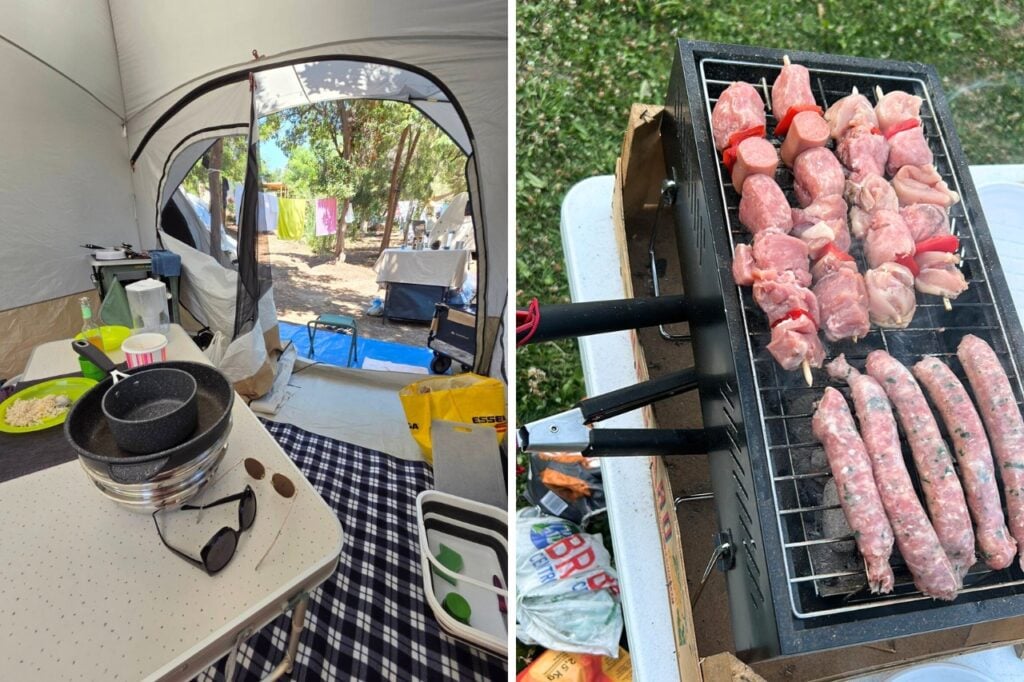
Animals don’t wait until bedtime to search for food.
Put groceries, snacks, pet food, garbage, cooking oil, and scented toiletries in secure storage as soon as you arrive.
Follow the campground’s rules exactly, especially in bear country.
A cooler sitting outside is not always secure. Some animals can open lids, chew through soft containers, or drag food away.
Campers should always store food whenever they leave the site or go to bed. Keeping it secured when it is not being used also reduces the chance of forgetting it outside.
And please don’t feed wildlife! Even when an animal appears harmless, feeding it changes its behavior and teaches it to return to campsites to look for people and food.
10. Do one final walk around
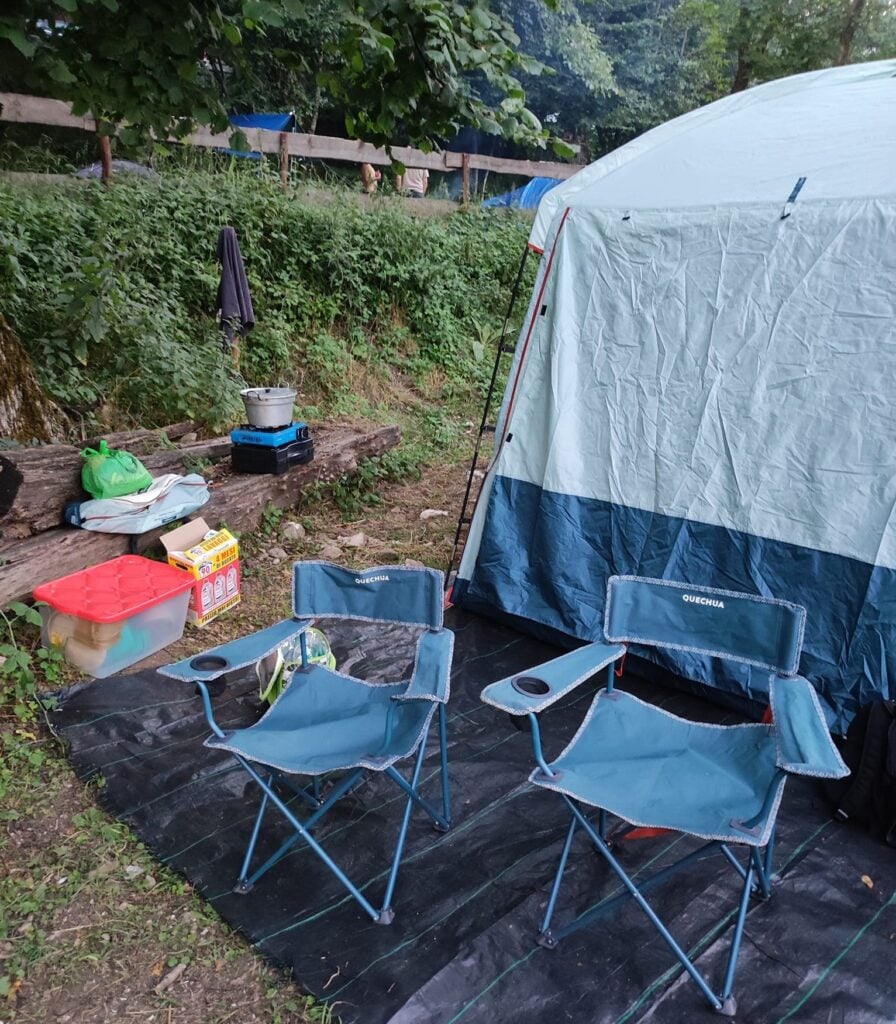
Before you finally sit down, walk around the site one more time.
Check that tent stakes are secure and easy to see. Make sure electrical cords don’t create a tripping hazard.
Confirm that the RV wheels are chocked, the steps are stable, and the connections are not leaking.
Pick up packaging, clips, wire ties, and other small pieces left from unpacking. These little things disappear into the grass and become litter.
Place flashlights or headlamps where you can find them after dark. Put shoes somewhere dry. Close food containers. Secure the trash.
Once everything looks safe and organized, sit down, light the fire if it is permitted, and enjoy the reason you came in the first place.
Before your next trip, it may also help to review the things you should never leave outside your RV overnight and the common mistakes campers make at campgrounds.