
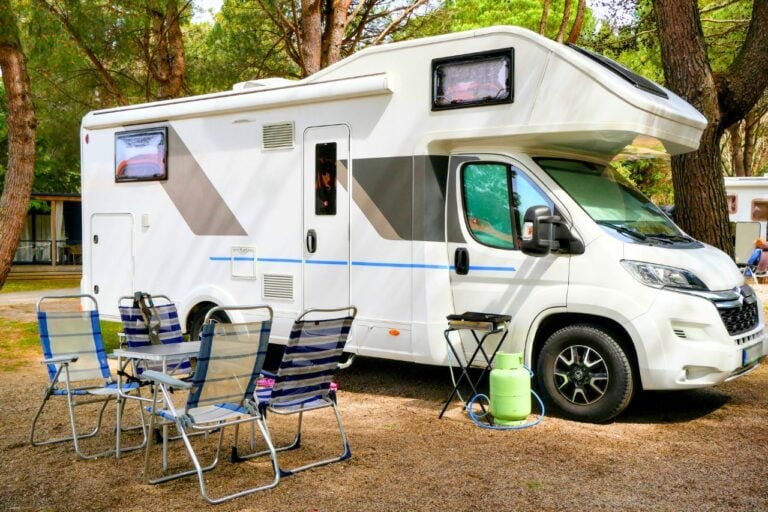
Traveling in an RV gives you a kind of freedom that is difficult to describe until you experience it yourself.
You can wake up beside a lake, have breakfast in the middle of a forest, and move somewhere completely different before dinner.
However, an RV is not exactly a hotel room on wheels.
There are tanks to monitor, weight limits to respect, and quite a few things that can go wrong if you get distracted.
Some mistakes are simply inconvenient. Others can cause expensive damage or completely ruin your trip.
Here are seven things you should never do in an RV, especially if you’re still getting used to this style of travel.
1. Never Drive Away Without Doing a Final Walk-Around
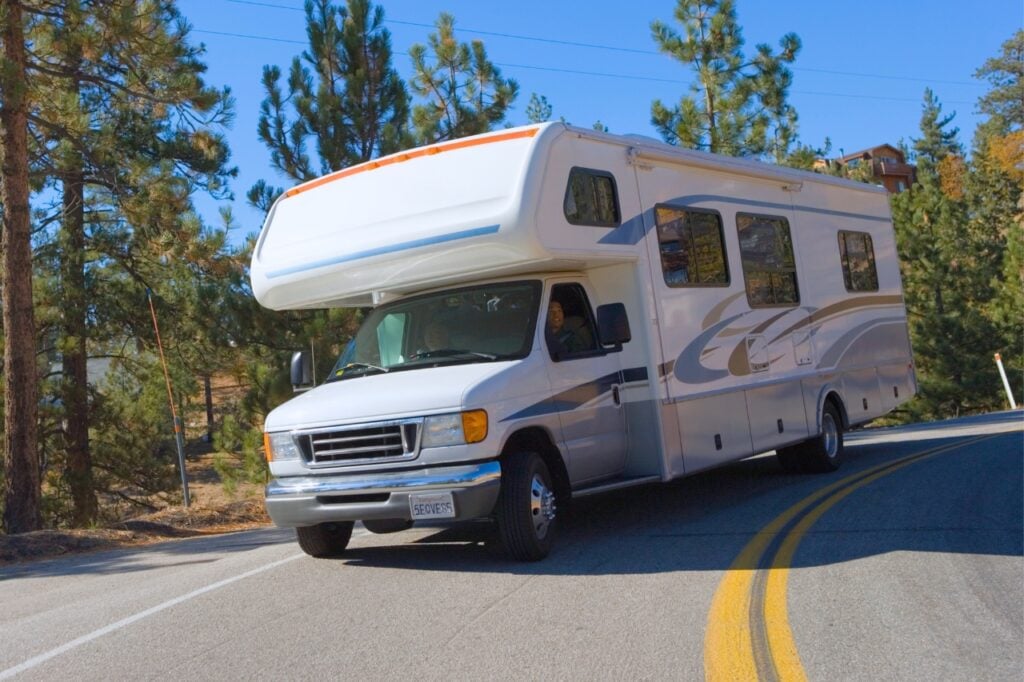
This is probably one of the simplest RV rules, but it’s also one of the most important.
Before moving your RV, always walk around the entire vehicle. Don’t just look through the mirrors and assume everything is ready.
Check that the awning is fully retracted, the steps are folded in, the leveling blocks have been collected, and every storage compartment is closed.
Make sure the electrical cable, water hose, and sewer hose have all been disconnected.
It sounds obvious, but people really do drive away while still connected to campground utilities.
You should also look underneath the RV and check the roofline from a distance. An open roof vent or antenna can easily hit a low branch once you start moving.
2. Never Ignore Your RV’s Height
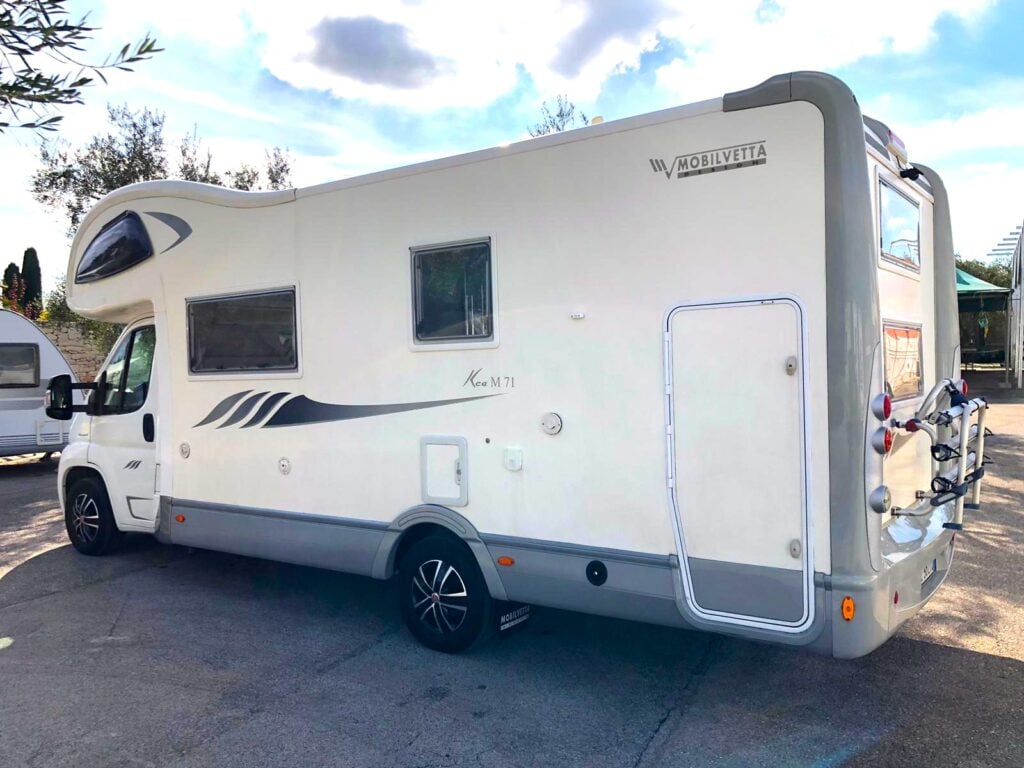
Driving an RV requires a different level of awareness than driving a regular car.
Your vehicle is taller, wider, and much less forgiving when you enter a gas station, parking garage, tunnel, or road with low branches.
You should know the exact height of your RV, including anything installed on the roof.
Air conditioners, satellite dishes, vents, and solar panels all count. Write the measurement down and keep it somewhere visible from the driver’s seat.
Don’t rely completely on ordinary navigation apps either. They may direct you toward low bridges, narrow roads, or streets that are unsuitable for large vehicles.
And be particularly careful at gas stations. The roof above the pumps may look high enough from the road, but judging clearance from the driver’s seat is not always easy.
3. Never Leave Loose Items Around While Driving
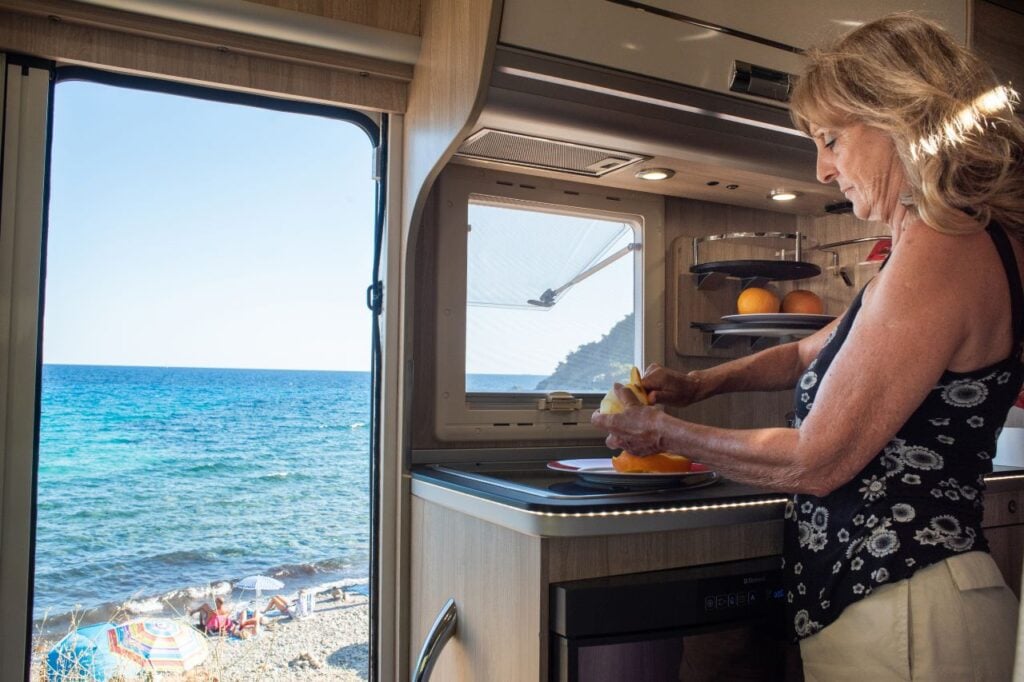
An RV can look perfectly organized when it is parked. Then you take one sharp turn and suddenly the kitchen has relocated itself across the floor.
Before driving, secure anything that could fall, slide or spill.
This includes dishes, coffee makers, bottles, laptops, decorations, and items left on countertops.
Cabinet doors should be properly latched. The refrigerator door must also be secured, especially if it contains heavy bottles or glass containers.
Pay attention to the bathroom too. Toiletries left around the sink have a strange ability to end up everywhere after a rough stretch of road.
Spend five extra minutes putting everything away. You will be glad you did when you arrive with your dishes and your nerves still intact.
4. Never Overload the RV
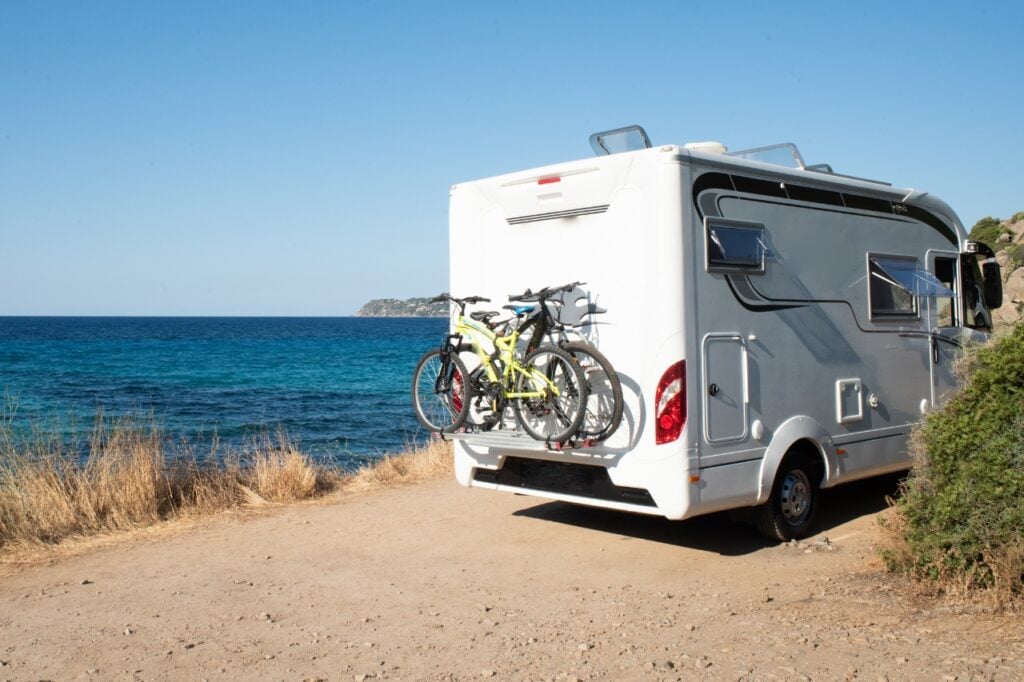
One of the easiest mistakes to make is bringing too much stuff.
An RV has plenty of cabinets and storage compartments, which can give you the impression that you are supposed to fill all of them.
But available space and available weight are two very different things.
Every RV has weight limits. Exceeding them can affect steering, braking, tire performance, and overall stability.
It can also place additional strain on the suspension and other components.
Water is especially heavy. A full fresh-water tank can add hundreds of pounds, depending on its size.
Food, tools, outdoor furniture, extra batteries, bicycles, and luggage also add up faster than most people expect.
5. Never Leave the Black Tank Valve Open at a Full-Hookup Site
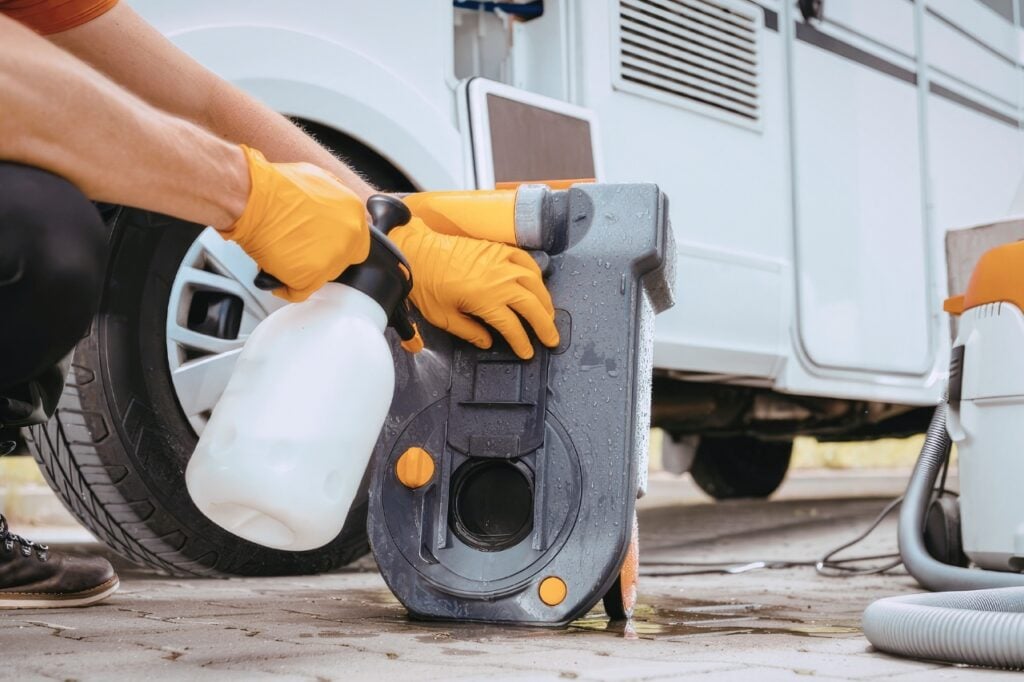
New RV owners often think leaving the black tank valve open will allow waste to drain continuously.
Unfortunately, it doesn’t work that way.
Liquids may flow out, while solid waste stays behind in the tank. Over time, it can build up into a very unpleasant blockage.
RV owners sometimes call this a “poop pyramid,” and yes, it is exactly as bad as it sounds.
Keep the black tank valve closed while you are using the RV. Wait until the tank is at least reasonably full before emptying it.
The larger volume of liquid helps carry the solid waste through the hose.
After dumping the black tank, flush it if your RV has a tank-rinse system. Then empty the gray tank.
The gray water helps rinse some of the remaining residue from the sewer hose.
Also, never use normal household toilet paper unless it is proven to dissolve quickly. Products designed for RV or septic systems are usually the safer choice.
6. Never Use the Awning in Strong Wind

An extended awning makes an RV campsite feel much more comfortable. It provides shade, creates an outdoor living area, and gives you somewhere to sit when there is light rain.
But awnings are surprisingly vulnerable to wind.
A strong gust can bend the arms, tear the fabric, or pull part of the mechanism away from the RV.
The weather can also change quickly, particularly near mountains, open fields, lakes, or coastal campgrounds. Not checking the forecast is one of the most common camping mistakes people make
Do not assume that securing the awning with extra straps makes it safe in every condition. If the forecast looks bad, retract it.
You should also bring it in before leaving the campground for a few hours. The sky might be calm when you leave, but that does not mean it will stay that way.
The same applies before going to sleep. Your awning is only one of several things you should never leave outside your RV overnight.
7. Never Ignore Small Leaks or Strange Smells
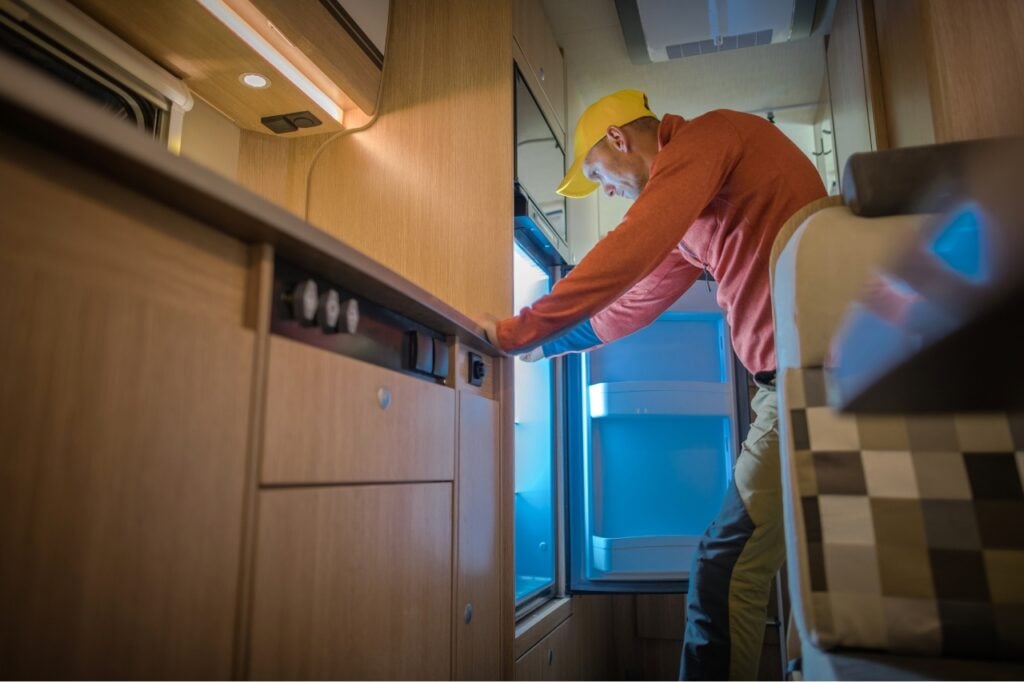
A small water stain, soft section of wall, or unusual odor may not look urgent. In an RV, however, small warning signs can become large repair bills rather quickly.
Water can enter through roof seams, windows, vents, slide-outs, and exterior fixtures.
Once it gets inside, it may damage insulation, walls, flooring, and wooden framing before you even realize how far it has spread.
Hidden water damage is also one of the most important problems to watch for when inspecting an RV before buying it
Check the roof and exterior seals regularly. If you see discoloration, bubbling, peeling material, or dampness, investigate it immediately.
It is also worth checking the campground’s water and electrical connections carefully whenever you arrive. These are among the most important things to inspect when arriving at a campground
Unusual smells should never be ignored either. A rotten-egg odor could indicate a propane issue, although it can sometimes come from a battery problem or the water heater.
A sewage smell may point to a tank, vent, toilet seal, or plumbing problem.
If you smell propane, avoid flames and electrical switches, shut off the propane supply if it is safe to do so, leave the RV, and get professional help.
It’s tempting to tell yourself that a strange smell will disappear. Sometimes it does. Still, that is not a gamble I would take inside a small enclosed vehicle.